
Mad About Mandevillas
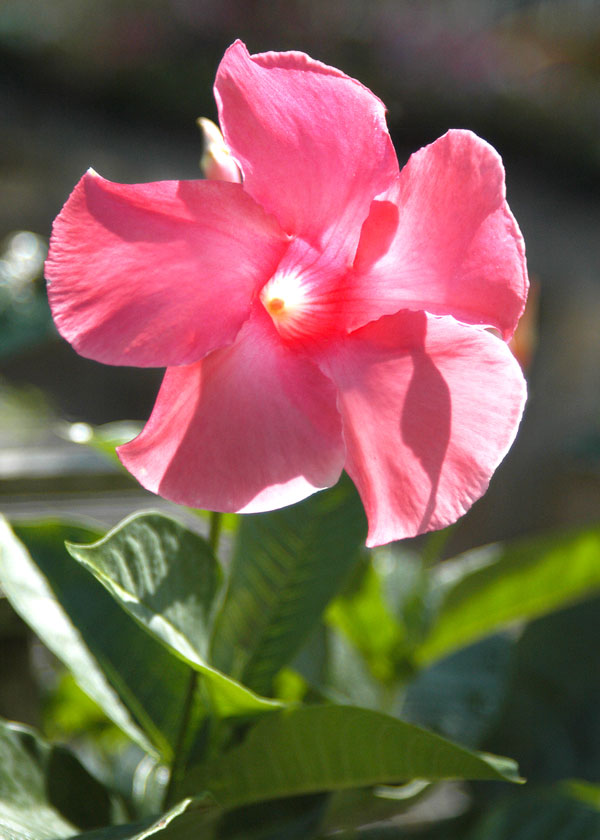
I saw my first mandevilla 35 or 40 years ago. They’d been around longer than that, but they were primarily grown in conservatories and botanical collections. Now they’re available for everyday gardeners like us, and this is the perfect time to stop by a garden center and see the wide range of colors and plant types.
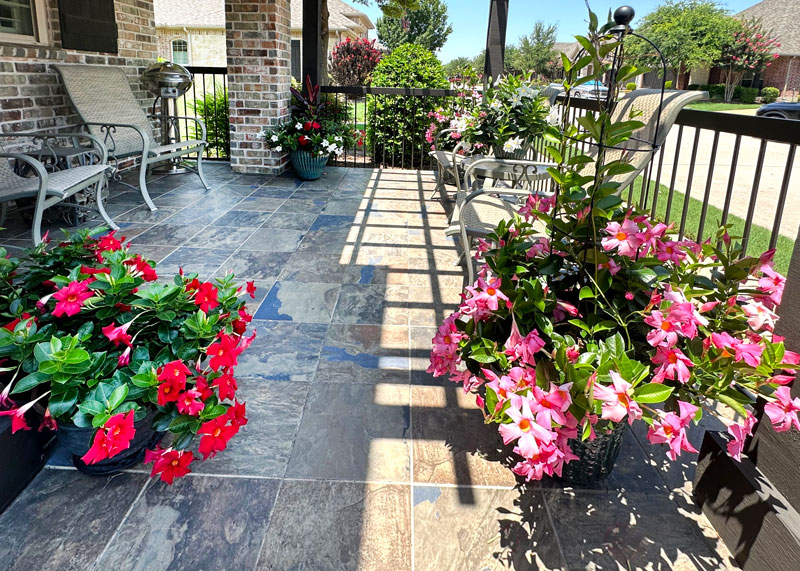
Little books have been written about this great group of plants. Suffice that I condense it all into short form.
What you’ll want to know…
• Common names: Mandevilla, Dipladenia (See note below to help with the confusion of difference between the two names.)
• Scientific name: Mandevilla sp.
Note: Until the 1930s Mandevillas and Dipladenias were put into separate genera. At that point they were consolidated into the one genus. Horticulturists, however, still tend to use the common name of Mandevilla to refer to vining types with larger leaves and larger flowers and the name Dipladenia for bushier types with smaller leaves and smaller flower.
• Native home of species: Brazil (near Rio de Janeiro), Bolivia, Argentina, and other parts of South America, Mexico, and other parts of Central America.
• Sun or shade: Best flowering will come with full or nearly full sun. Shade, if any, should be during hottest part of mid-afternoon.
• Soil: High quality, highly organic potting soil. If grown in ground, rich garden loam.
• Moisture needs: Consistently moist, never allowed to dry out.
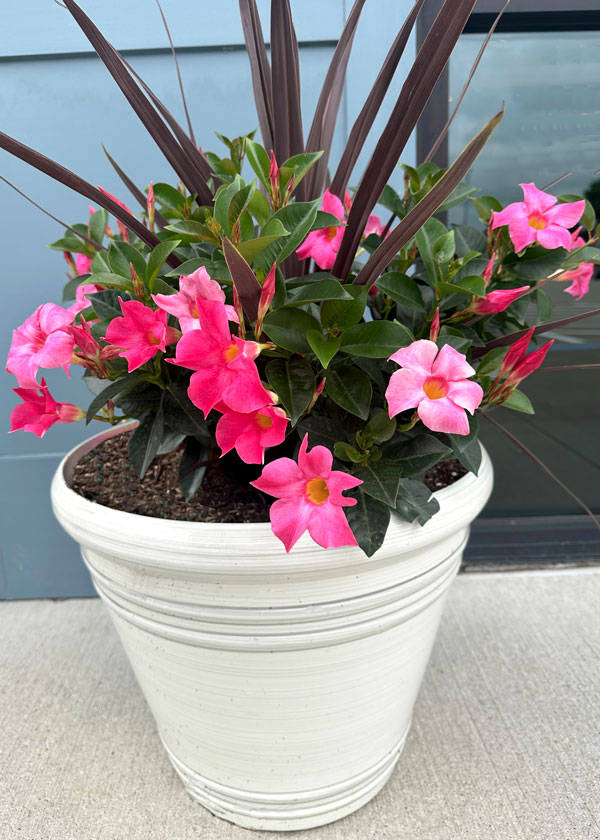
• Mature size: Old vining types will grow to 8 or 10 ft. tall. Newer compact forms may be shrubbier and grow only to 18 to 24 in.
• Growth habits: Vining types climb by twining around their supports, so provide a wire trellis or other substantial structure. Bush forms stay compact with little, if any shearing.
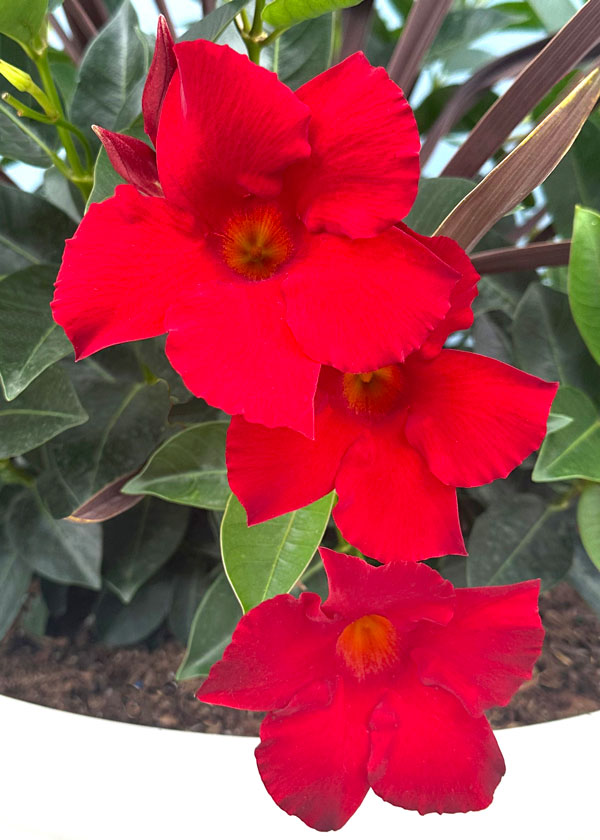
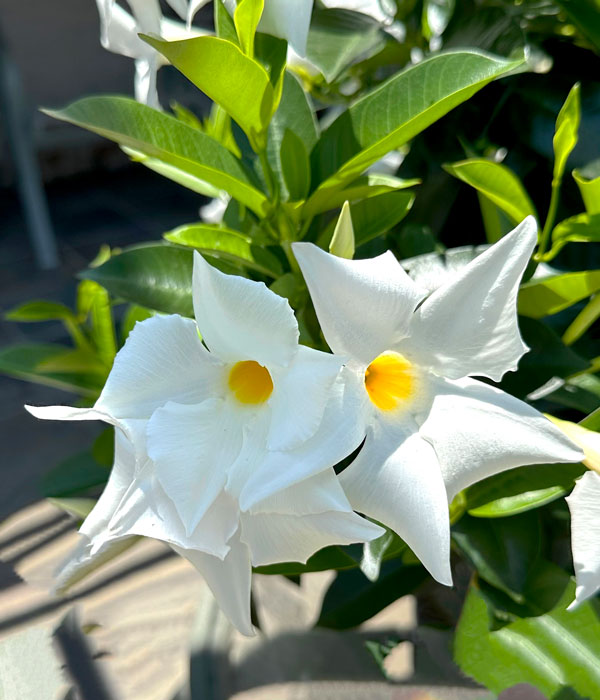
• Flower colors: Pink, white, red, crimson. Foliage is deep green.
• Hardiness Zone: Zones 10-11. Must be protected from frost and any temperatures below 40F. Best grown in pots so it can be put into heated greenhouse or bright sunroom over winter. Otherwise, treat it as a tropical annual unless you live along the South Texas Gulf Coast.
• Propagation: Started from stem cuttings taken at any time during the growing season.
• Fertilizer needs: Keep plants growing actively to keep them producing their flowers. Use a high-nitrogen, water-soluble plant food diluted as recommended on package. Feed each time that you irrigate.
• Pest problems: Mealybugs seek them out. Watch for white masses on the backs of the leaves and in the crotches of the twigs. It’s easiest to use a cotton swab dipped in rubbing alcohol to remove them manually as soon as you observe them.