
Protect crape myrtles now
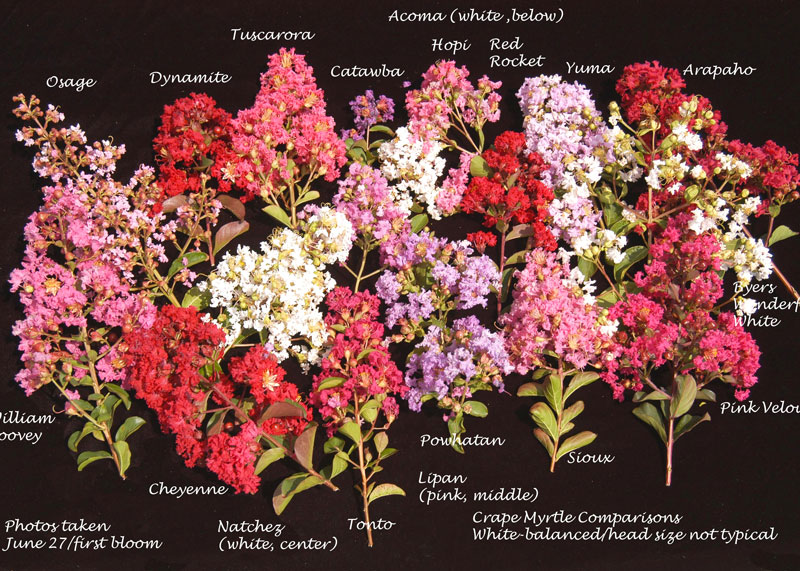
I’ve been working with crape myrtles most of my now-lengthy career. It’s been grand to see named varieties enter the picture so that we now can anticipate mature sizes and growth forms. We’ve been able to catalog differences in winter hardiness as well.
It’s also been rewarding to see Texans slowly realizing how damaging “topping” is to their crape myrtles’ long-term appearance and vigor. That progress has been painful, but all we can do is try.
The current and most frustrating problem we’ve encountered, however, has been a scale insect that slipped past customs sometime early this century. Crape myrtle bark scale was first observed in Richardson in 2004, being brought to a local nursery for identification and help. That nursery actually contacted me, and I immediately contacted the Texas AgriLife Extension entomologist in North Dallas – just a few miles from that nursery.
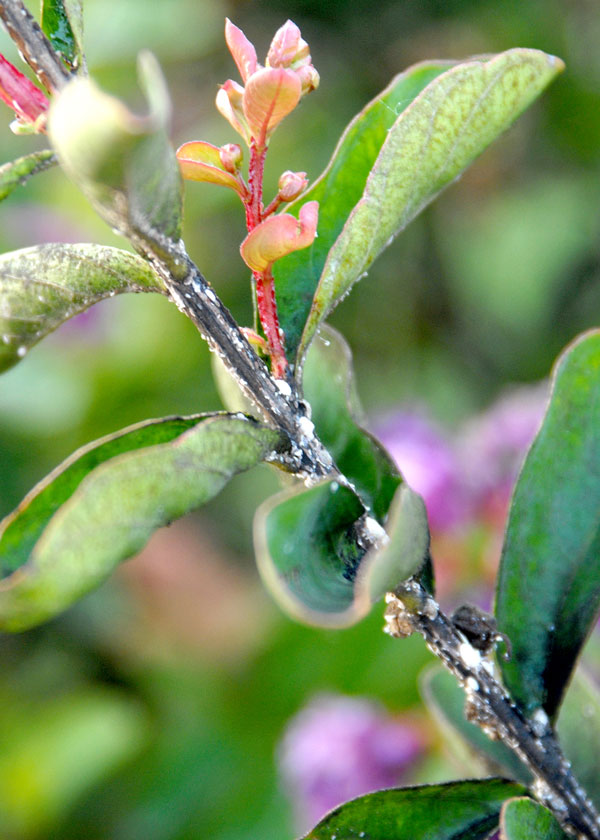
Until he retired, Dr. Mike Merchant helped us mightily. After several years of comparative research, Dr. Merchant determined that our best chances at control would be to wash the trunks with a soft brush or large sponge and warm, soapy water to remove as many of the scale insects as possible as well as the sooty mold that had developed in the honeydew residue secreted by the insects.
He and others on his team compared many different insecticides, and his final recommendation remains accurate today: application of a systemic insecticide (Imidacloprid) as a soil drench in the middle of May. The plants will take in the insecticide, and it will be in their sap as the insects try to feed. It works on both the scale as well as crape myrtle aphids later in the summer.
Research from the University of Arkansas confirms those suggestions, but they also recommend application of a horticultural (“dormant”) oil spray in January, after the trunks have been scrubbed, to let the oil soak into the crevices where overwintering scales are trying to protect themselves.
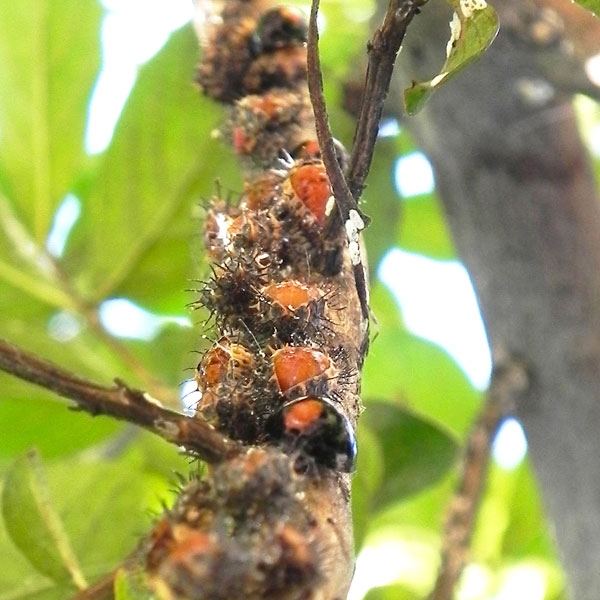
Odds are that you have not scrubbed the trunks or applied the horticultural oil this year. However, you still have time to apply the Imidacloprid, and you really should do that. This is your time, and if bark scales are in your town, your crape myrtles will be counting on you.