
Can you name my topic here?
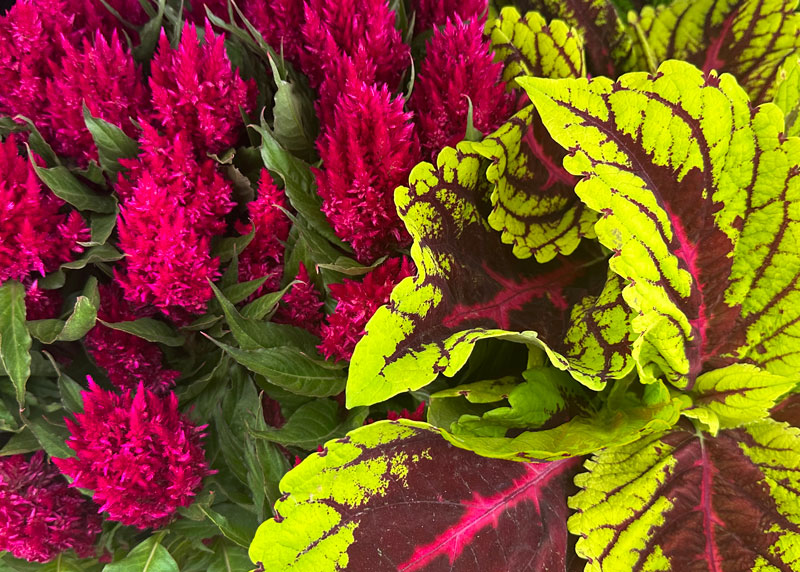
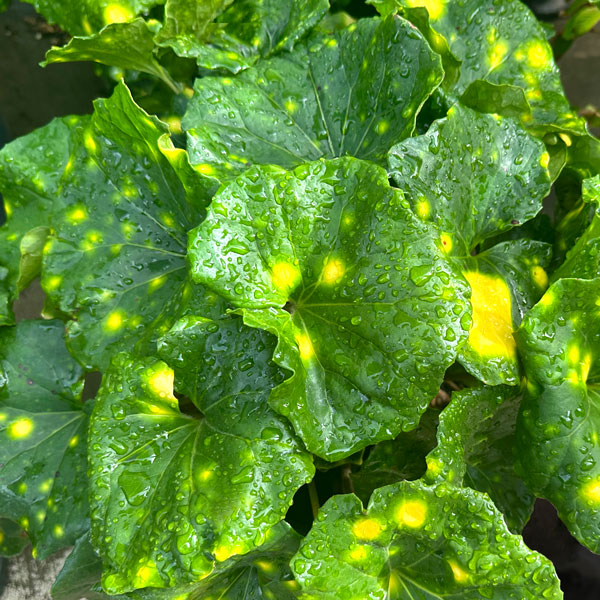
So, I asked you what I might have seen in these two plants sitting together at Calloway’s that would call out a story to me. Truth is, it was their delightful textures. Celosias are feathery light, and I’ve never seen a coleus with larger, bolder leaves. That thing could stop traffic.
Texture – the forgotten feature…
We think about color when we’re out shopping for plants. If we’re smart, we think about mature size and growth form. But how many people think about textures?
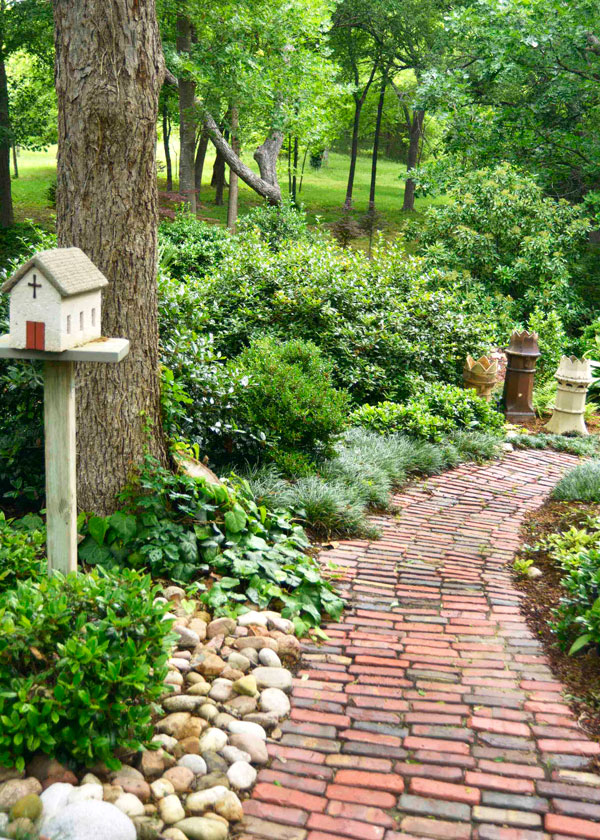
I had the opportunity once to visit the home of one of Texas’ finest landscape architects, and as I walked up to his front door, I realized that there wasn’t a flowering plant anywhere in sight.
His landscape was totally shaded like ours, and he had done his whole design featuring nothing but variations in textures. It was magnificent, and I committed that afternoon to carry his message to others the rest of my career.
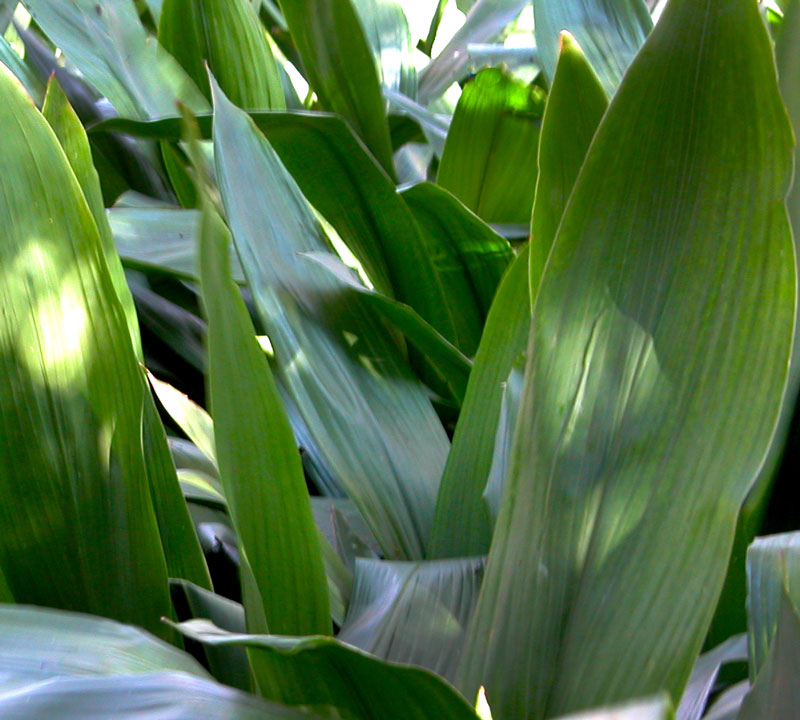
Texture might be described as the “visual weight” of a plant or an object. That’s where we pick up terms such as “heavy-” or “light-textured.” Plants with large leaves are labeled as “heavy-” or “bold-textured.”
That list is lengthy, but just as a few examples, bur oaks, elephant ears, fatsias, oakleaf hydrangeas and southern magnolias. All are visually heavy in a landscape. (That could include the large-leafed coleus that gave rise to my story today.)
Ferns, dwarf yaupon hollies, nandinas, junipers, liriope and ornamental grasses all bring light, or fine textures. Some might describe them as “airy.” (And enter the plume celosia featured in my opening photo.)
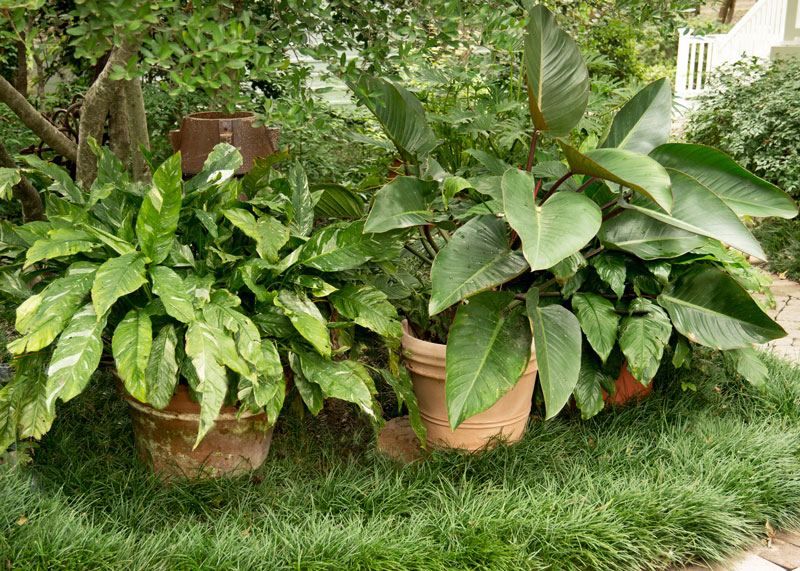
Every last thing that you add to your landscape has its own inherent texture. Boulders, concrete pedestals and flagstone walks all are obviously heavy-textured, while wrought iron and fine gravel bring a much lighter feel.
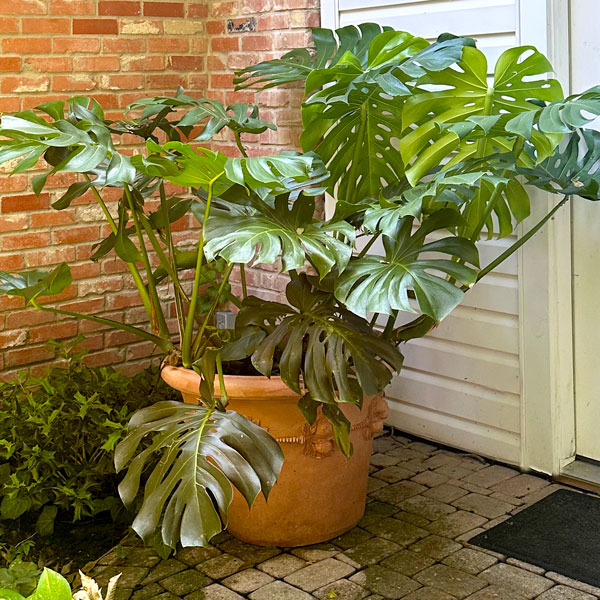
As with any kind of decorating, you want to use a nice variety of textures. Use bold-textured plants and products to draw attention to an otherwise uninteresting area. Large fountains and urns become the focal points of their surroundings. Stone walls draw a definitive boundary to their gardens. They stop your eye’s flow across the landscape.
Use fine-textured elements to make a small garden appear larger. Cover a bank with a trailing groundcover such as Asian jasmine or Tam junipers. Use arching Sea Green junipers as a soft backdrop to other plantings. Japanese maples add color to a shaded garden without shrinking its apparent size.
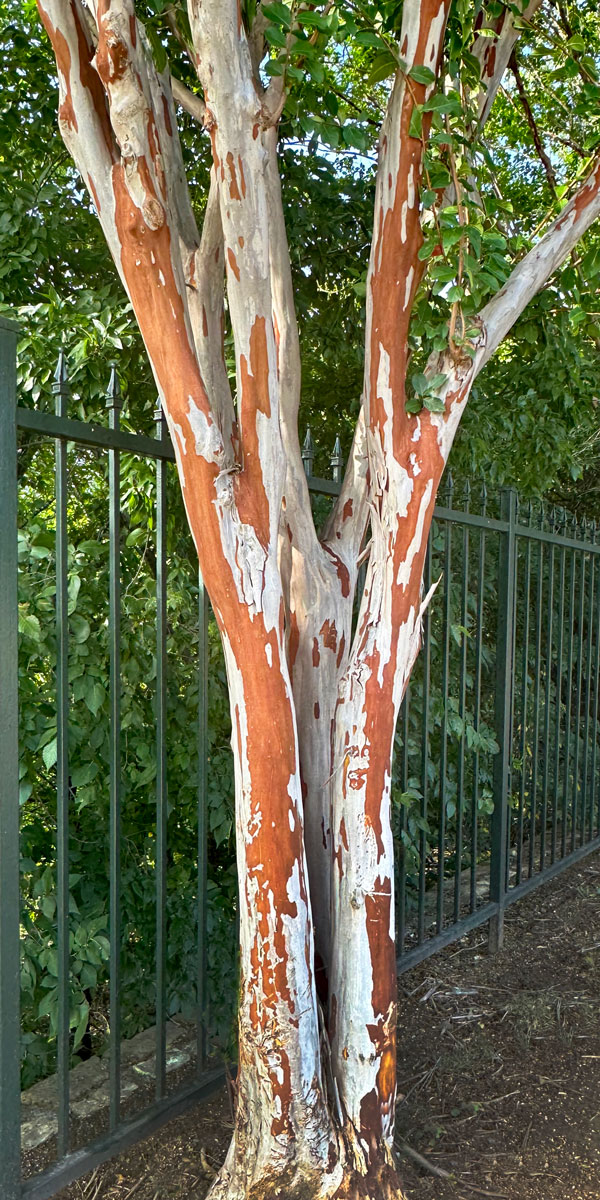
Trunk and bark play a part in determining a plant’s textural contribution to a landscape. Slick-trunked crape myrtles, yaupon hollies and Texas persimmons give a lighter feel. Heavily fissured barks of eastern persimmons, bur oaks and cottonwoods pour in more drama. Bark may not be something you’ve spent much time considering, but it’s deciduous plants’ main visual contribution for several months every winter.
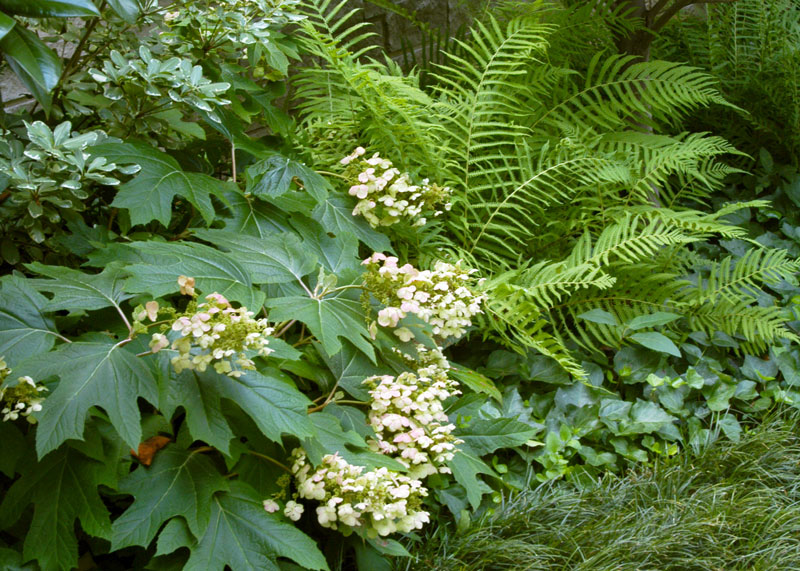
One of the most effective ways to show that you understand this entire topic is to use contrasting textures side-by-side. Mondograss is handsome next to Carissa hollies, English ivy or rounded river rock. Or, if you’re using mondograss as a replacement for turf due to excessive shading, contrast its texture by planting oakleaf hydrangeas or Mary Nell hollies within the same bed.
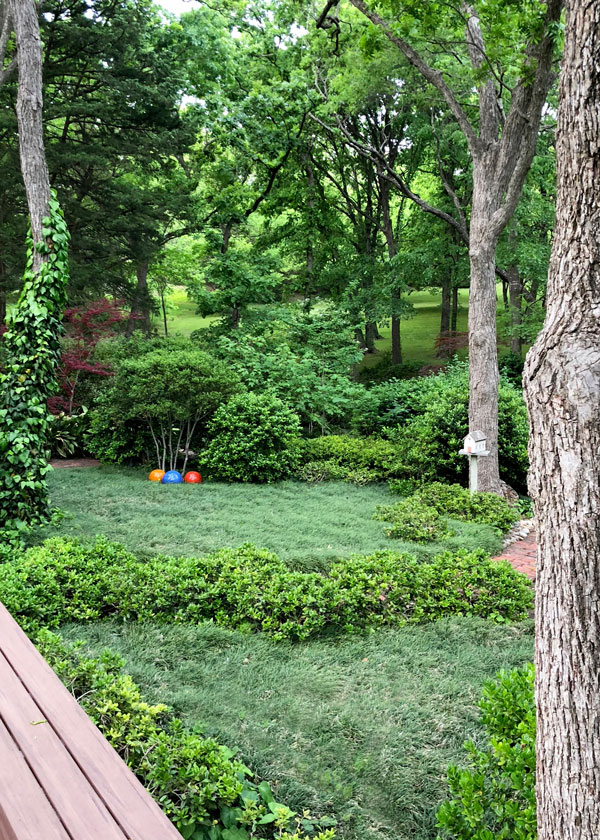
As you see gardens you really admire over the next several months, make note of how often they’ve worked a handsome combination of textures into their artistic designs. The more you think about it, the more it will be a part of your planning, too.