
Time for a prayer and confessional
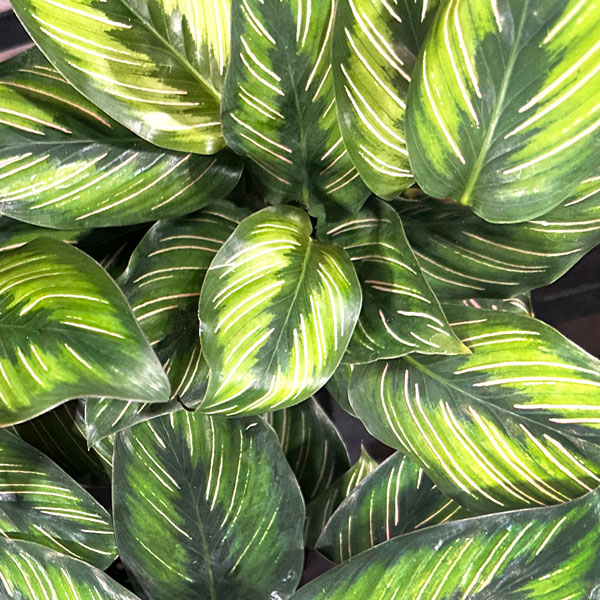
I’ve been fascinated by this group of tropical houseplants since I was a kid, but I found early on that their “margin of error” was razor thin. Compared to my beloved sansevierias and peperomias, calatheas and marantas are downright picky.
There are, however, people who thrive on that kind of challenge. All they need is guidance up front and they’re off to prove they’re up to the task. So, if you’re in that group, this story is for you.
Why are they called “prayer plants?”
Many of the plants in this group fold their leaves upward each evening, then lower them again during the day.
Not content with that as my answer as a teenager, however, I decided it was because I had to say prayers over them to keep them growing in my greenhouse. (Remember, my specialty was cacti and succulents and low humidity xeriphytes.)
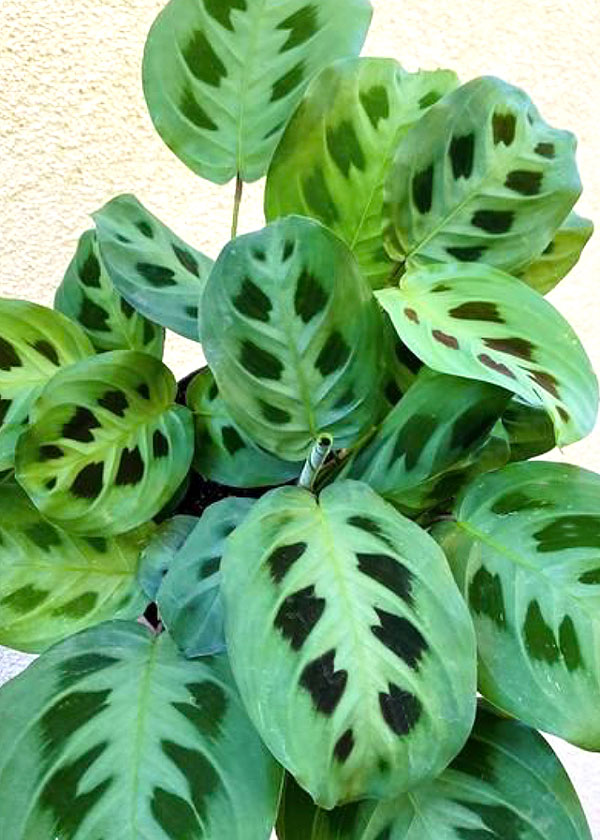
Facts to know about plants…
Prof. deWerth taught us at A&M that we shouldn’t worry about “how to grow plants,” but instead “how plants grow” (in their native homes). If we can mimic those conditions, our plants will have the best possible chance of success.
Native home: Tropical rainforests of Central and South America, especially Brazil, but also Columbia, Peru, Ecuador, and adjacent countries.
Native setting: Forest floor with bright light but heavily filtered from direct sunlight. High humidity year-round (70 percent or higher). Year-round temperatures ranging between 70-85F. Frequent rains, but soils are porous and drain quickly. Plants never stand in waterlogged soil, nor are their roots ever allowed to go dry for days at a time.
Ideal indoor setting: East window, but not against cold glass and not in prolonged baking sunlight. A north or northeast window should work well. West and south or southwest windows would require sheer curtains.
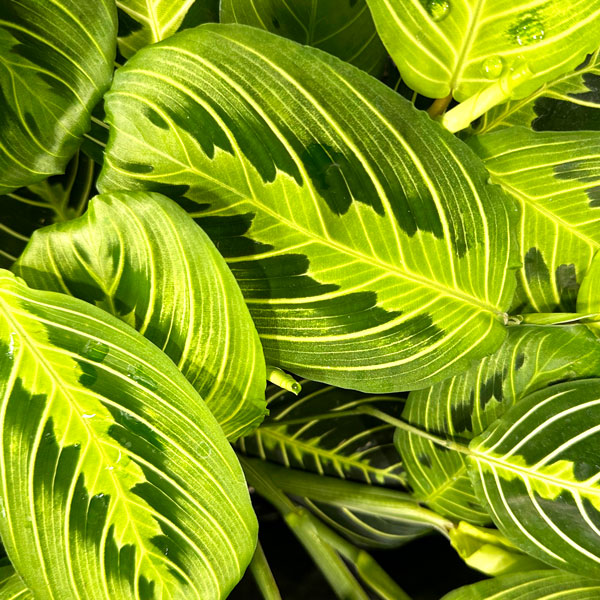
Water: Tap water with minerals can cause problems over a period of time, so leach the minerals out of the potting soil by running water through the drain holes every few times that you water your plants. Rainwater or distilled water will bypass the accumulating minerals issue. Use a porous but highly organic potting soil mix that drains quickly. Do not allow the plant to sit in water for more than a few minutes at a time. Your goal will be to keep the soil consistently moist but never soggy.
Humidity: Remember the rainforest’s 70 percent relative humidity. Your home in the winter is probably only 20 to 25 percent, perhaps lower. Misting is not effective. Forced air heating quickly blows the moisture away. Grouping your plants together will help. Keep them away from fireplaces, drafty windows and doors, and away from heating vents.
Temperature: Do not expose marantas and calatheas to temperatures below 55F. In summer, while they would probably tolerate our hot weather just fine, they’ll do better in one place where they can become acclimated indoors and where they can stay in that 55-80F temperature range. Moving them around opens up too many chances of something undesirable.
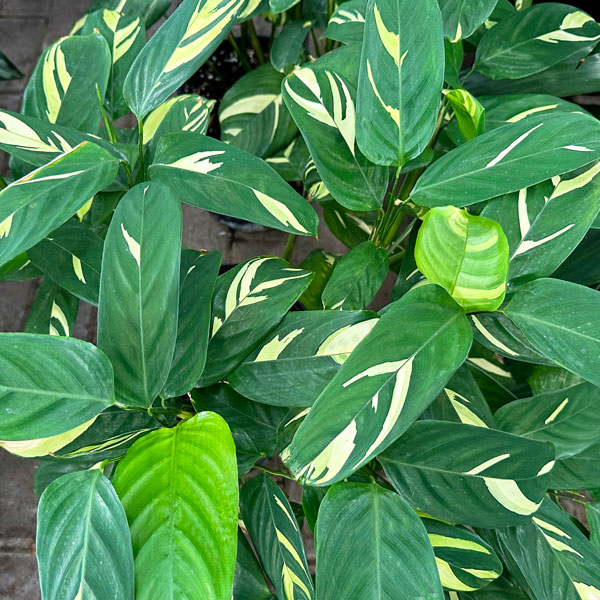
Fertilizer: Because they grow in well-draining soils in nature, and because rain leaches nutrients out of that soil, you can figure they would not need frequent feedings. Use a complete-and-balanced, water-soluble plant food at half the recommended rate every month or two during the growing season. Let them rest in the winter.
Problem solving: These are the things that eventually happened to my prayer plants. In all honesty, I think I wasn’t patient enough. I had too many plants and I didn’t give these sweethearts the extra attention they need and deserve.
Browned leaf edges and tips: By far the most common issue. This happens when we let the plants get too dry, or when we expose them to excessive sunlight. Those mineral salts, either from build-ups from hard water or from too much fertilizer can certainly cause this.
Curled leaves: Usually this results from letting the plants get too dry, but it can also be because of low humidity. It could be from exposure to low temperatures in the 30s and 40s. But, in my observations, it’s usually from letting them get too dry. Faded leaf colors are the result of strong sunlight. Leggy growth happens when the plant needs more light.
To put it all on a 3×5 card…
If you want to grow marantas, calatheas and their kin:
Water thoroughly with a low-mineral water as the soil’s surface begins to dry out. Keep the plant in bright, filtered light. Raise the humidity.
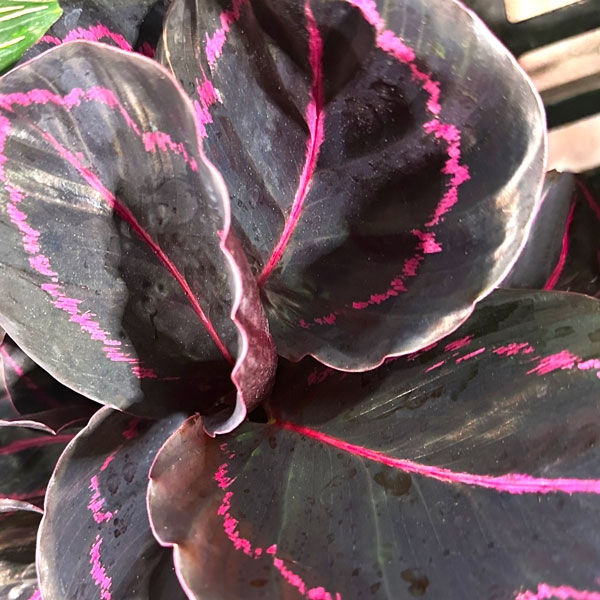
Note: The folks at Calloway’s and Cornelius Nurseries always have marantas and calatheas in stock. Their Texas Certified Nursery Professionals can give you great advice on keeping your plants looking their best. I took most of these photos at Calloway’s last weekend.