
Attracting hummingbirds to your garden
They’re delightful to watch and as mobile as any animal God has created. They can fly at top speed, then stop on a dime, then turn upside-down or fly backwards when needed. Whatever it takes to reach the next nectar source.
Cornell’s Lab has fabulous information, and the website Celebrate Urban Birds is a treasure trove of helpful facts and information.
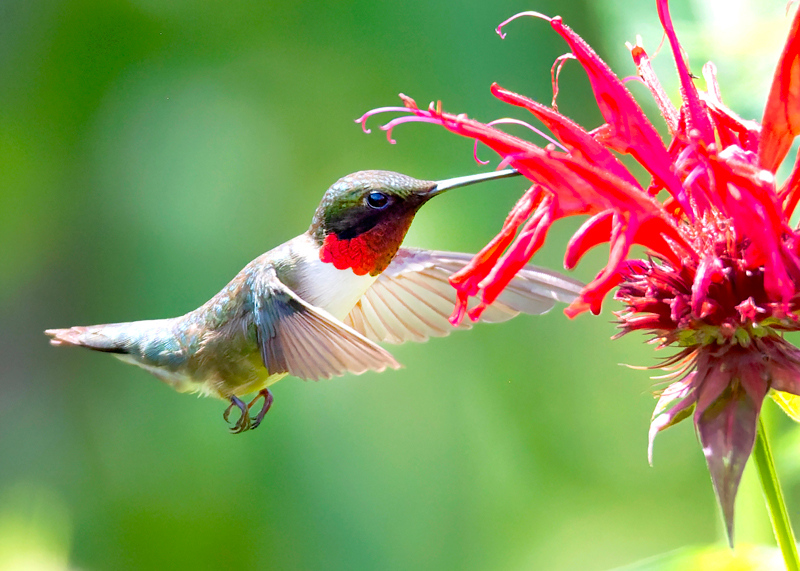
Things to know about
Ruby-throated hummingbirds…
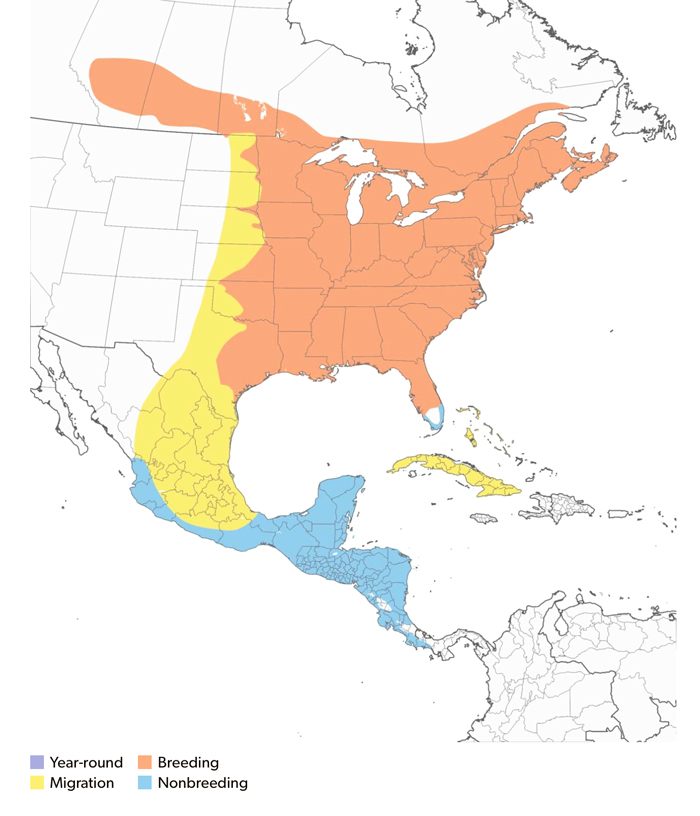
• Their range covers the eastern two-thirds of North America, from the Gulf Coast well into the prairies of Canada.
• Preferred native foods are red- and orange-flowering plants with tubular flowers. Salvia greggii, trumpetcreeper, cardinal flower, honeysuckle, beebalm, pentas, and many others. Also eat mosquitoes, gnats, small bees, and spiders.
• Males are very territorial. Called “bully birds,” they will fluff up to make themselves appear larger and chase after other hummingbirds that have invaded their domains.
• Nests are built atop branches rather than in crotches. They are made of thistle or dandelion down held together by spider webbing, and they take 8 or 10 days to complete their nests. The inner bowl of each nest is the size of a marble. The nests remain pliable as the chicks grow.
• Hummingbirds migrate. According to Cornell, most of the Ruby-throats spend their winters in Central America. Most get there by flying across Texas or the Gulf of Mexico.
• Ruby-throated hummingbirds’ wings beat 53 times per second!
• They do have legs, but they’re so short the birds can’t really walk. All they can do is shuffle.
Pastor Tommy Brumett’s tips on
attracting hummingbirds to your garden…
In full disclosure, Pastor Brumett, or “Tommy” as he asks us to call him, is our pastor. He introduces himself by saying, “I preach at the First United Methodist Church in Downtown McKinney.” He and his family have been with our church 18 years, and we’ve been members almost all of those years.
Tommy’s sermons frequently mention his bird-watching ventures. And so it is that I invite him to join me on my Saturday afternoon programs on KLIF to discuss the birds of Texas and how we can nurture them.
Here were his tips from this past Saturday on attracting hummingbirds. You can listen to our podcast to compare if you wish. See if I’m reporting on my pastor accurately.
• Start with a good hummingbird feeder. Better yet, have several and space them some distance apart. That will account for that territorial nature of the males.
• Keep your feeders clean. If the nectar begins to turn cloudy, take the feeder down, clean it thoroughly, and put it back up with fresh nectar immediately.
• Nectar consists of 4 parts of water and 1 part of sugar. No red food coloring, please! Products called “nectar extender” may give you a day or two of longer life from your nectar, but it will need to be replaced more often in hot weather.
• Native plants attract hummingbirds. After all, that’s what they’re used to encountering as they pass through. They love the color red, so Salvia greggii is a sure winner.
• Tommy says it’s a myth that you must take your feeders down by any particular time in the fall or you will encourage the hummingbirds to stay around too long going into the winter. Hummingbirds know internally when they need to migrate. When you see no more birds at your feeders, then it’s time to take the feeders down, clean them, and put them away until March in South Texas or April 1 (the date Tommy gave) in North Texas.