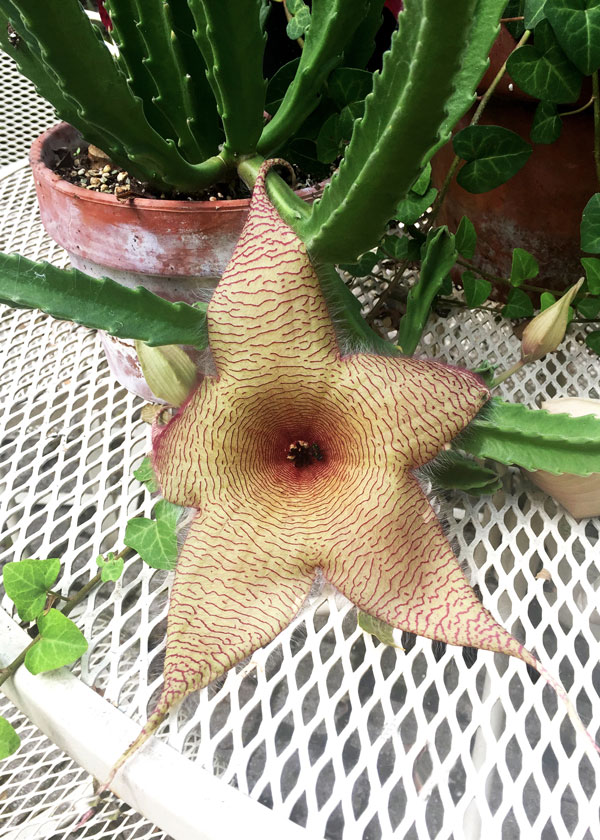
Strange plants, those stapelias
There are flowers that attract butterflies. Elsewhere in this issue I wrote about those that lure hummingbirds. But when you’re a 12-year-old boy those are mundane. When I heard there were plants that were pollinated by flies – that smell like rotting meat – hey, count me in!
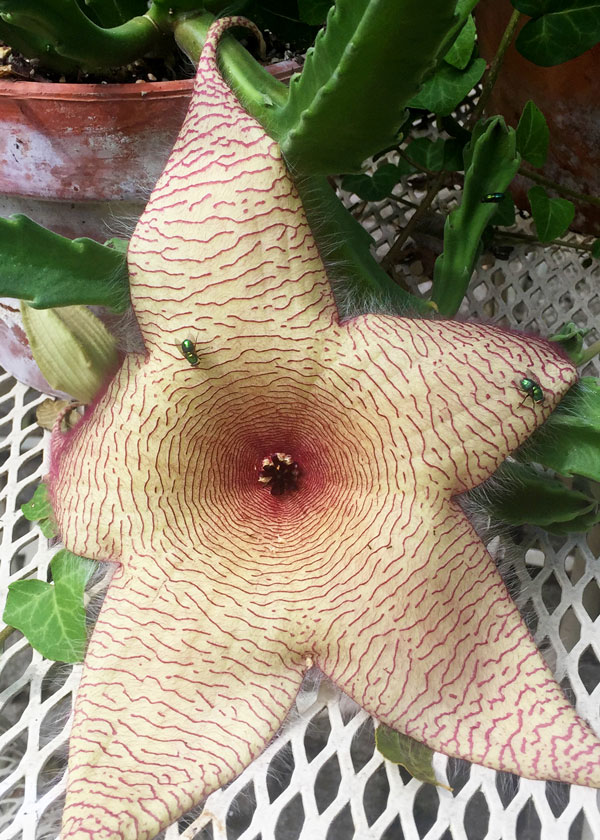
And so began my lifelong fascination with the plants known collectively as “carrion flowers.” The old books I wore out as a kid listed 40 some species of the genus Stapelia, although those never-satisfied taxonomists have now reclassified them into a couple of other genera.
You’ll get a kick out of this fact. These plants may look like cacti, but they’re not even close. They belong to the dogbane family (Apocynacea), which means they’re cousins to (ready for this?) periwinkles, oleanders, mandevillas – and milkweeds. Their seeds emerge from single-slotted pods just as milkweeds do, and they look almost the same – like a parachute without the fabric.
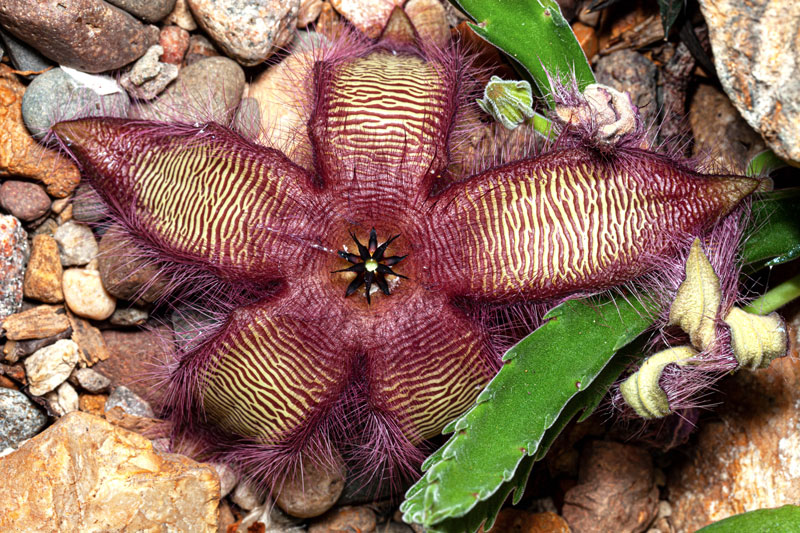
The name “Stapelia” was coined by none other than the father of binomial nomenclature himself, Carolus Linnaeus, in 1737. However, it wasn’t until the late 1700s that Francis Masson, a plant explorer/gardener from the Royal Botanic Gardens at Kew in England, collected and cultivated stapelias.
Stapelias are native to a wide range of habitats in Africa, most of them arid and well-draining, often nestled against rocks or at the edges of partial shade cast by shrubs. Their countries of origin include South Africa, Namibia, Botswana, Zimbabwe, Zambia, Mozambique, Angola, Eswatini, Lesotho, and Malawi.
Flowering time, whether in the Southern Hemisphere where they are native or here in Texas and the U.S., is late summer going into the fall. Flowers last a few days, but multiple flowers will be produced on any given plant over a several-week period.
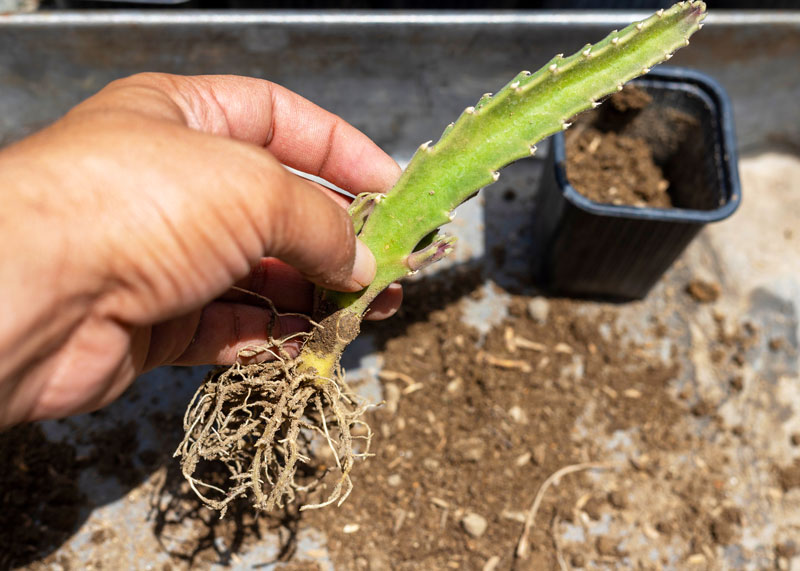
Stapelias are rooted from stem cuttings. Allow the freshly cut stem segment to air dry for a couple of days before you insert each one into a small pot filled with potting soil. Keep it slightly moist but never wet for a prolonged period. When your cutting has developed its own set of roots lift it out carefully and pot it into its own pot filled with the same potting mix you are using for the mother plant.
Mealy bugs are the only pest problems I have ever encountered. I find it easiest to watch for them carefully, then to daub them off with a cotton swab dipped in rubbing alcohol if and when I see them.
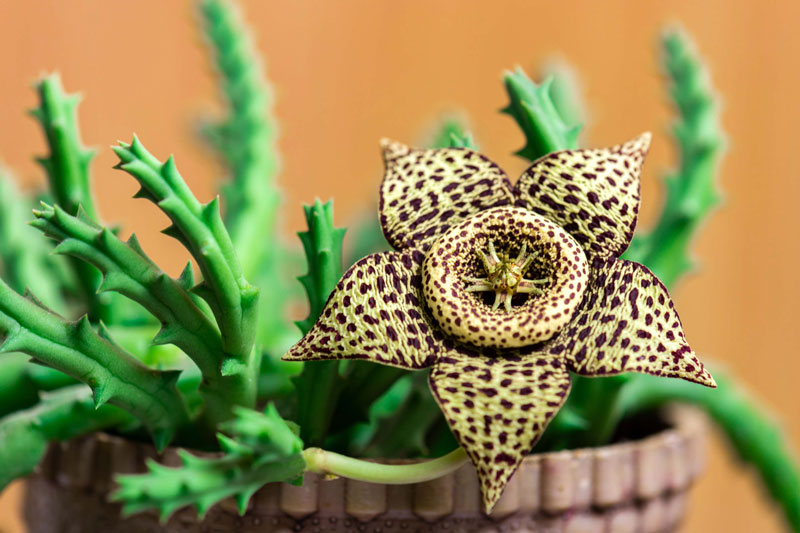
Cultivation essentials…
• Protect from freezing weather. Stapelias are not winter hardy.
• Provide bright light with protection from intense afternoon sun from mid-spring through summer and into mid-fall. Filtered shade is best.
• Perfect drainage is critical. Use a coarse potting soil mix amended with expanded shale, perlite, or similar fine gravely material.
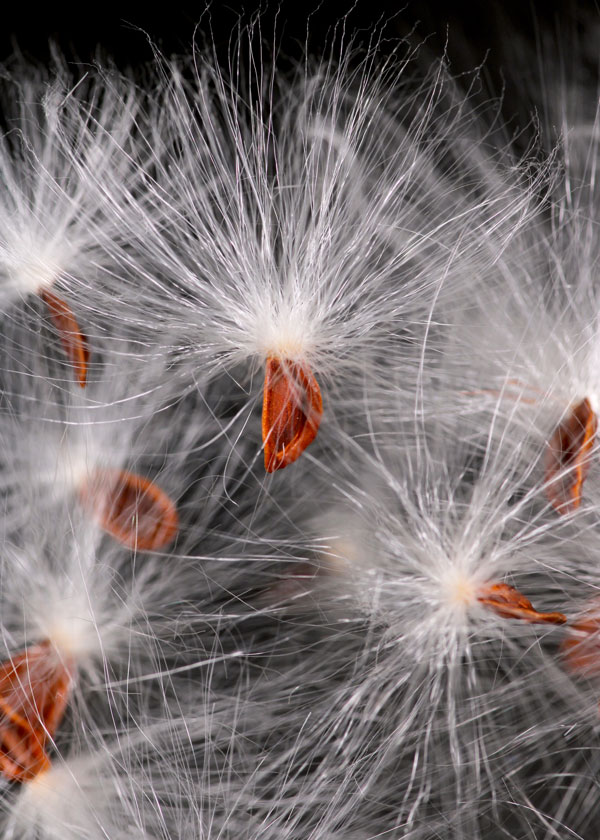
Photo by RECEP_OZTURK/SHUTTERSTOCK
• Water deeply, then allow to dry before watering again during periods of active growth.
• Keep plants “on the dry side” during cool weather. The plants will not be trying to grow then. When in doubt, do not water.
• Keep plants somewhat rootbound. Terra cotta pots dry out more quickly. You can grow stapelias equally well in plastic pots vs. clay pots. There’s just a narrower margin of error.
Something by which to remember stapelias…
Among all the species in this wonderful group, Stapelia gigantea stands out the most. Its flowers can exceed 10 in. across.
But size is not what people remember.
They lean in to admire it.
Then they lean down to smell it.
That is usually when Stapelia gigantea makes its most lasting impression!
Happy sniffing!