
Extreme heat and trees – by Steve Houser
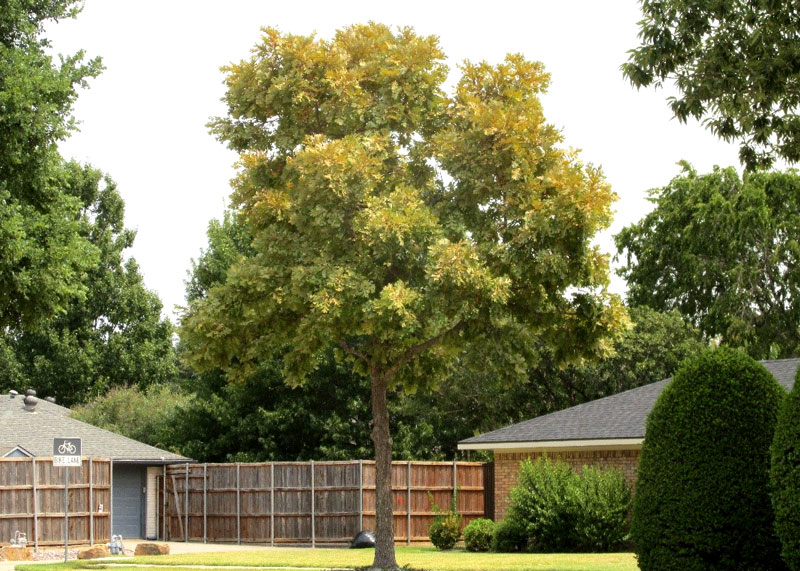
Texas trees are no strangers to hot summers, but too much heat for too long can cause problems. Extreme temperatures hotter than 104F can slow or stop a tree from functioning normally and cause damage in several ways.
A tree’s species, age and health as well as soil moisture can influence its resilience.
Planting drought-tolerant species can help, but trees on irrigated sites won’t suffer from drought when adequate moisture is provided.
However, there is an important distinction: drought and extreme heat are not the same thing. Even a well-watered tree can suffer heat stress when temperatures remain excessively high for extended periods.
Daytime and nighttime temperatures are often higher in cities because of the urban heat-island effect, increasing the potential for heat damage compared to trees growing in rural environments.
Trees cool themselves primarily through transpiration. That’s the release of water vapor from leaves through tiny pores called stomata. As water transpires from the leaves, it helps cool leaf tissues. When the water loss through transpiration exceeds a tree’s ability to replace it for an extended period, wilting, yellowing, premature leaf drop, and even death can occur.
Trees weakened by prolonged heat and higher temperatures may also be more vulnerable to insects and pathogens.
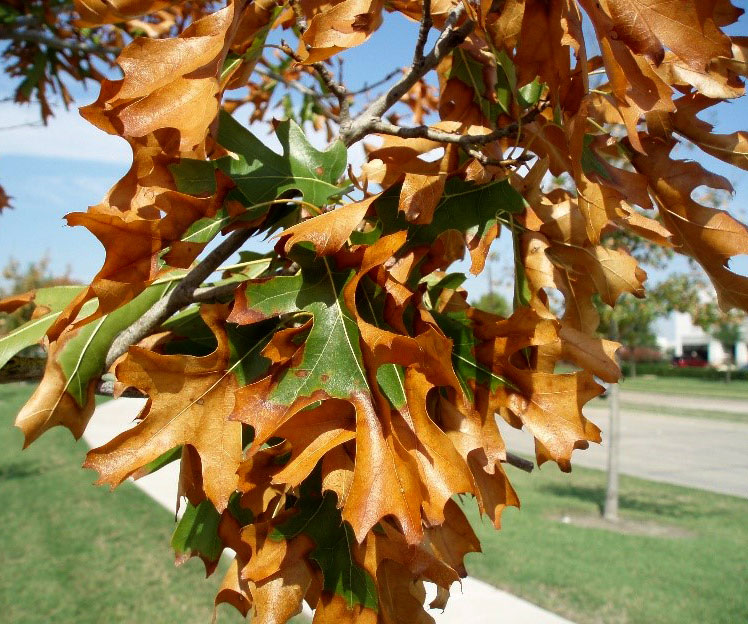
A lack of soil moisture can greatly increase heat damage. Under severe heat conditions with limited soil moisture, embolisms, or air bubbles, can form in xylem vessels and disrupt or block the flow of water from the roots to the leaves.
Keeping your trees adequately watered can reduce heat stress. That goes without saying at temperatures like we’ve been experiencing recently. On the other hand, of course, you must also avoid prolonged overwatering that could deprive the trees’ roots of needed oxygen.
Urban trees can face additional stress when roots grow beneath or near concrete, asphalt, and other hardscapes where soils can become hotter, drier, and more compacted. Elevated soil temperatures can also damage root tissue and interfere with water and nutrient uptake.
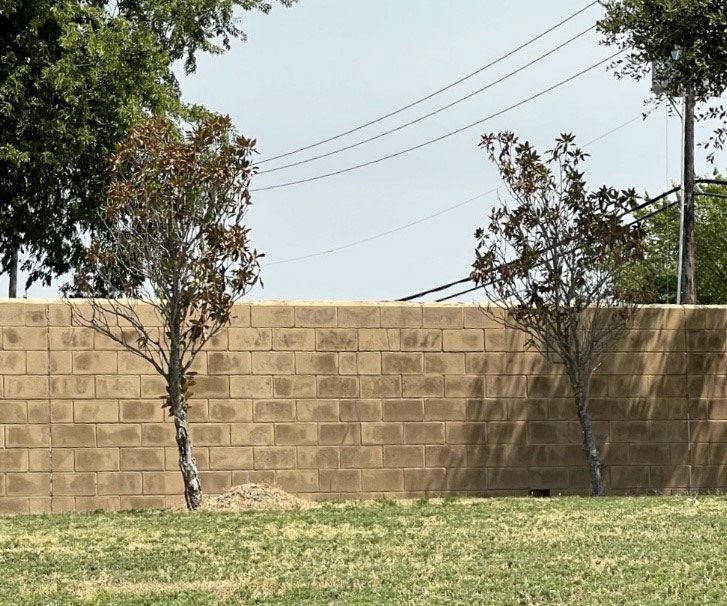
Extreme heat and a lack of soil moisture may also contribute to branch and trunk failure, particularly in large, mature trees or trees with existing defects.
The topic is complex, but reduced water flow weakens cell wall structures and wood tissues become more brittle. That increases the potential for structural failure. The weight of foliage and fruit in the summer can place additional mechanical stress on branches and trunks.
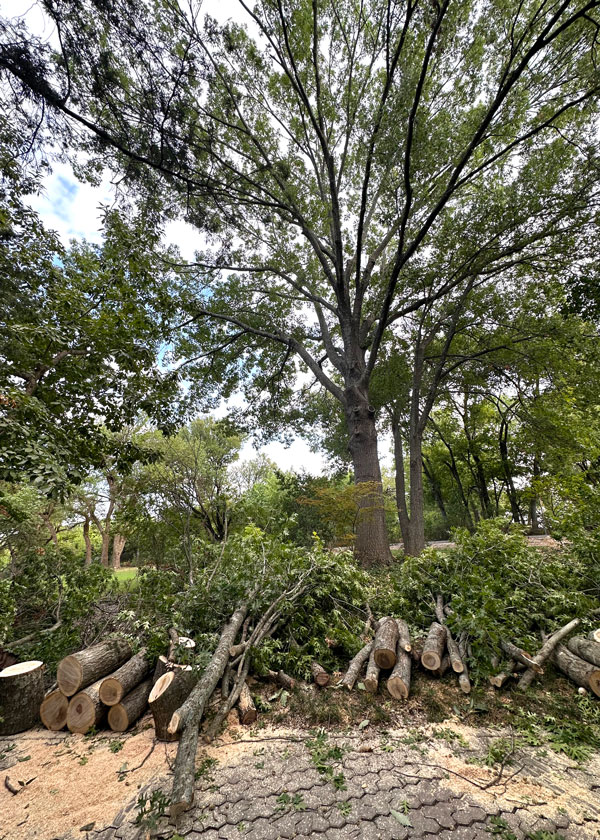
Trees with decay, cracks, or weak branch attachments are at greater risk. Trees without these deficiencies can also fail without warning or significant wind due to weaker cell walls. Researchers continue to investigate why this occurs.
To sum it all up concisely…
• Plant the best possible species of trees in your landscape.
• Be attentive to their needs for water and nutrients.
• Be mindful of their roots and trunks as you work around them, particularly when digging or changing grades.
• Have a certified arborist check in on your trees regularly to monitor their needs.
Steve Houser is co-founder and owner of Arborilogical Services of DFW. He was selected as one of our state’s first Arborists of the Year more than 20 years ago. In full disclosure, Arborilogical Services is an advertiser in e-gardens and on my radio programs, but neither Steve nor I would let that taint what we provide for you here.