
Silver Satin is soft to the eyes
With temperatures outside soaring, this is a great time to look into a few unusual houseplants. Here’s one that’s related to one of America’s favorites. You’ve probably grown golden pothos (devil’s ivy) most of your life. But have you tried its first cousin Silver Satin Scindapsus?
There’s a big old group of these two genera (Scindapsus and Epipremnum) out there in the marketplace. Most nurseries will have a handful. Better nurseries will have up to a dozen. Collectors’ sources, especially online, will have them all, even if you have to do a bit of web-searching for a while.
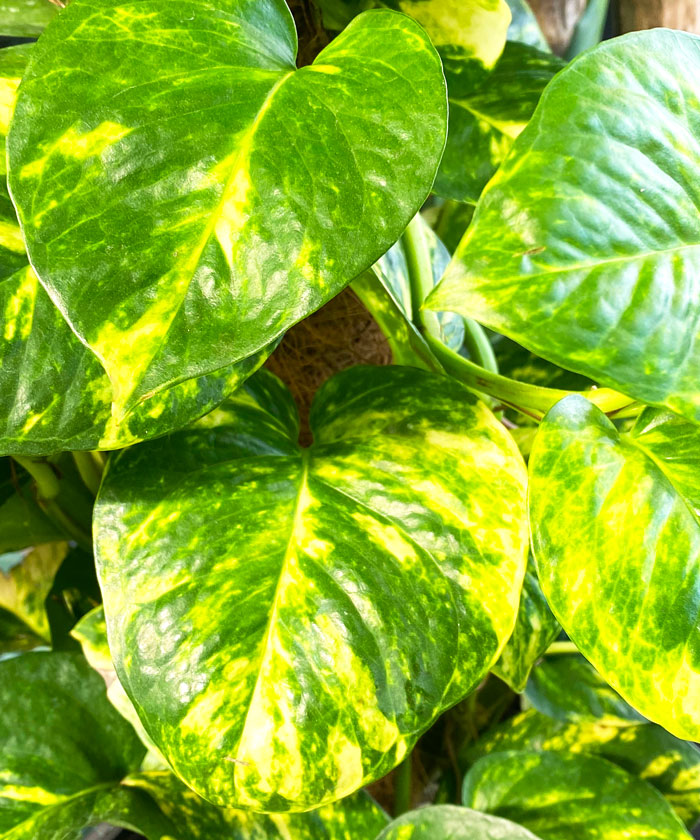
For decades these plants were all grouped together. Botanists began to realize they needed to be separated, so in the past 40 or 50 years the plant we’ve known as “golden pothos” or “devil’s ivy” and its variations were put into the genus Epipremnum. Our featured plant for today was left in the genus Scindapsus.
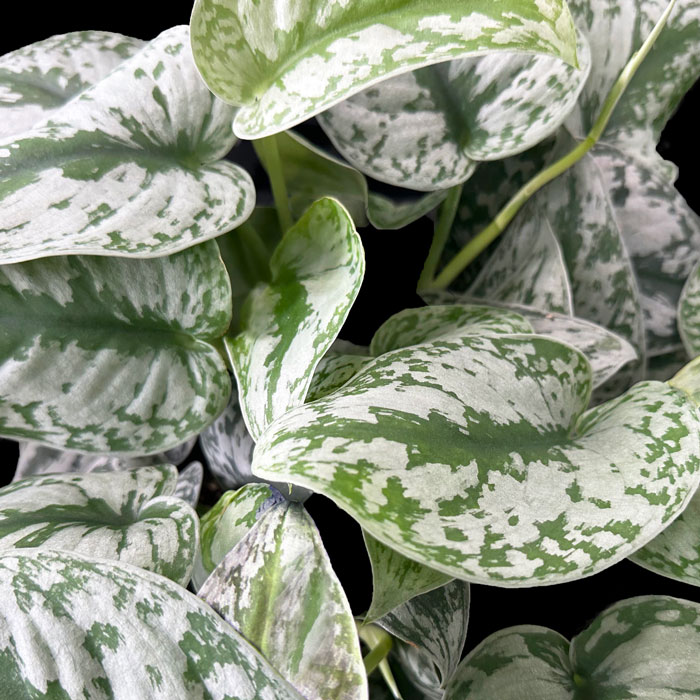
Facts about ‘Silver Satin’ and its sisters…
Common Name: Silver Satin Scindapsus
Scientific Name: Scindapsus pictus
Plant Family: Araceae (Aroids)
Native Home: Southeast Asia, New Guinea, Queensland, various South Pacific Islands
Growth Habit: Vine, clings to trees and other supports.
Introduced into horticulture: 1850s through explorations of the Dutch East Indies (Indonesia). Grown by the English Veitch Nursery. Brought into the United States by the late 1800s, but it remained a collector’s plant for decades.
“Recent” notoriety: The surge in shopping malls and their interiorscapes brought use of unusual tropical plants such as this one in the 1970s and 80s. It has become a staple with gardeners ever since.
Where are they produced? Central Florida, notably around Apopka, Mount Dora, and Eustis. That region is renowned for its production of foliage plants.
Tissue-culture plugs: These are produced by the millions in Thailand, Indonesia, Malaysia, China, Taiwan, and (for Euopean growers) The Netherlands.
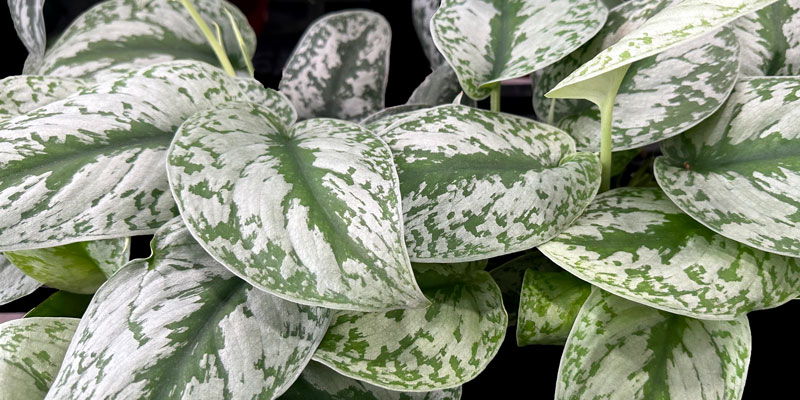
How is it used? Hanging baskets, pots.
Potting soil preference: Loose, highly organic, no native topsoil.
Lighting: Medium to bright indirect light. Does well under normal indoor lighting. No direct sunlight.
Temperatures: Does best in 60-85F. range. Intolerant of anything approaching freezing.
Fertilizer: Diluted water-soluble, high-nitrogen food monthly.
Pest problems: Few, but may attract mealybugs. Daub off with cotton swab dipped in rubbing alcohol.
How propagated: Stem cuttings with 3-4 leaves and their stem attached. Root directly into pot filled with the potting soil mix. Stick 3-4 cuttings per 4-in. pot.
Other types: There are 15 or 20 cultivars that even quick and casual looking will turn up online. Serious collectors will probably find more.
Here’s a shout back to our friend the late Randy Lemmon from Houston. He posted a really nice article entitled “11 Types of Scindapsus You Should Know About.”
Note: Here’s a very practical tip. The more highly variegated one of these plants is, the slower growing it’s going to be. That usually translates into “weaker” as well. Just keep that little fact in the back of your mind when you start choosing plants with a lot of white or yellow pigmentation in their leaves.
(Credit to Calloway’s and Cornelius Nurseries for maintaining a good selection of pothos and Scindapsus varieties. I took these photos two weeks ago. I’m heading back to make a few purchases!)