
Best Trees for Heat and Drought – by Steve Houser
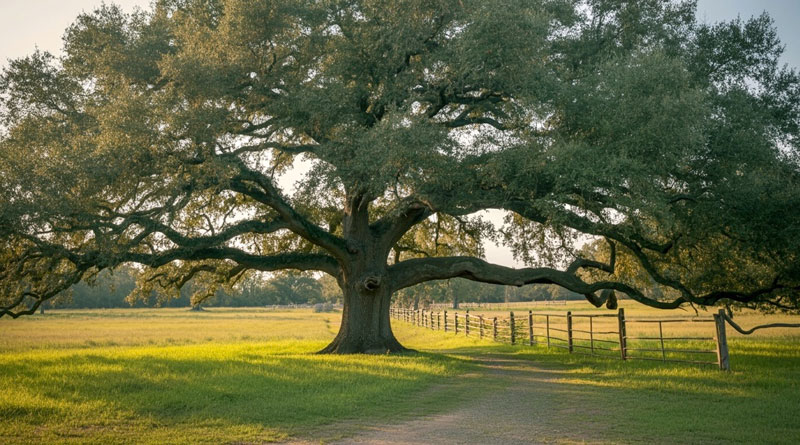
As the companion piece to our recent Extreme Heat and Trees, I wanted to highlight some Texas-tough trees that are more tolerant of those challenging conditions.
We arborists find we can only do so much to minimize effects of extreme heat and drought on our trees. One thing is to plant species that are best adapted to those conditions.
Large shade trees…
Here are some of the best heat- and drought-tolerant shade trees.
• Pecan (Carya illinoensis) Some cultivars are more heat- and drought-tolerant than others. Plant varieties recommended by horticulturists of Texas A&M and the Texas AgriLife Extension Service for your part of Texas.
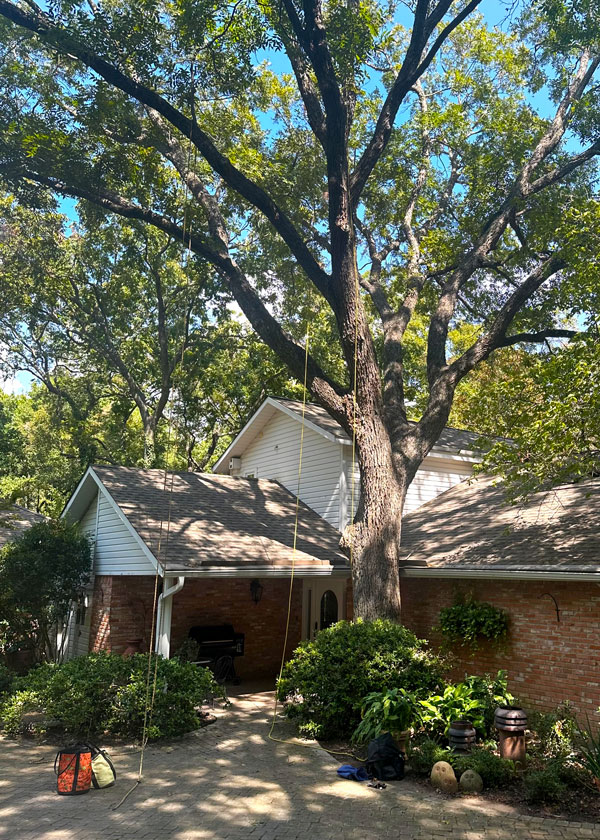
• Post oak (Quercus stellata) Slow-growing and, as a result, may be more difficult to find commercially. But, if you have native post oaks on your property, take the best possible care of them. A certified arborist will be your best ally.
• Live oak (Quercus fusiformis or Q. virginiana) Q. fusiformis may be more heat- and drought-tolerant. However, the two species can hybridize, making it difficult for a novice to distinguish between the two.
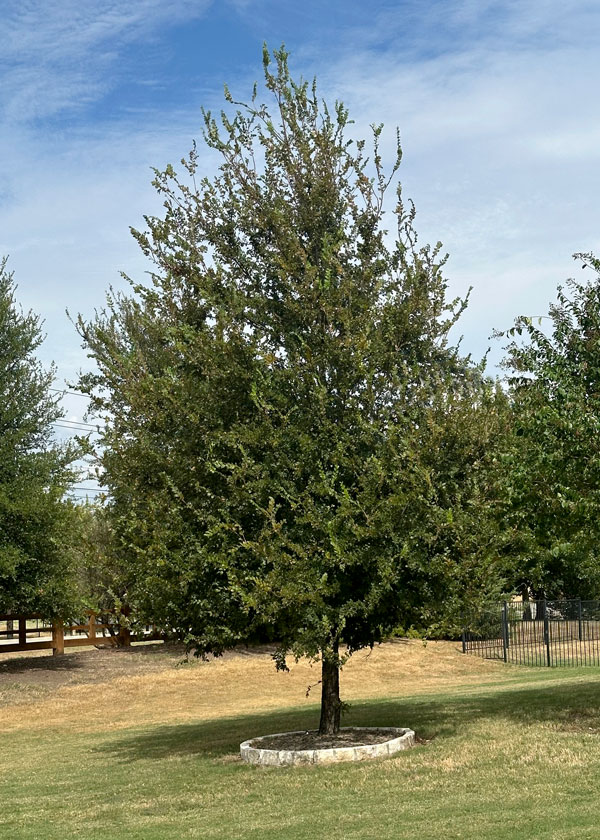
• Cedar elm (Ulmus crassifolia) Moderate to high heat and drought tolerance, although they may shed foliage during stressful conditions. These are adapted to a wide range of soil and climatic conditions.
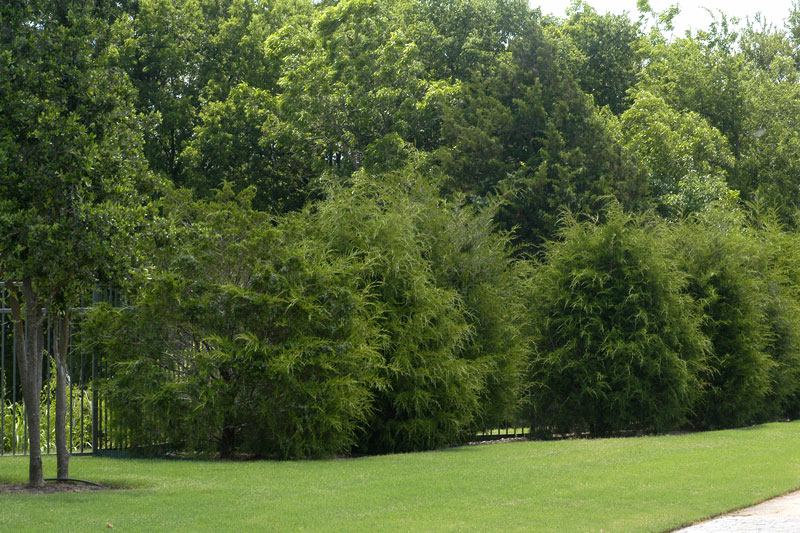
• Eastern redcedar (Juniperus virginiana) The native “cedar” of much of the eastern half of the state. It holds up well to our weather conditions. Drought tolerant, but may struggle with extended periods of high temperatures.
Medium to small shade and ornamental trees…
• Texas persimmon (Diospyros texana).
• Mexican buckeye (Ungnadia speciosa).
• Desert willow (Chilopsis linearis).
• Mexican white oak (Quercus polymorpha).
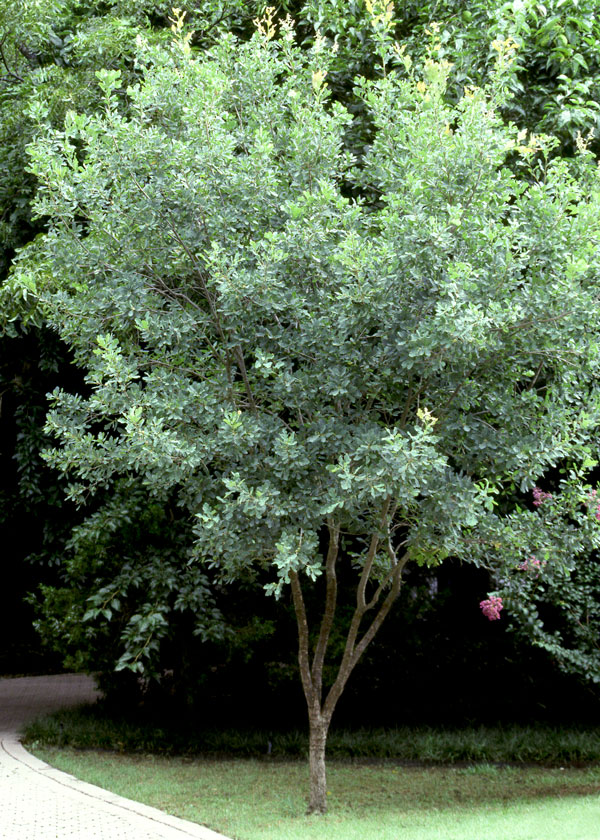
• Lacey oak (Quercus laceyi).
• Canby oak (Quercus canbyi).
• Mexican sycamore (Platanus mexicana).
• Mexican plum (Prunus mexicana).
• Crape myrtle (Lagerstroemia indica and L. fauriei hybrids).
• Yaupon holly (Ilex vomitoria).
Less common choices…
Many other heat- and drought- tolerant species could be added to the list, but they are not commonly grown commercially. That list includes:
• Little walnut (Juglans macrocarpa).
• Netleaf hackberry (Celtis laevigata var. reticulata).
• Mexican blue oak (Quercus oblongifolia).
• Hercules’ club (Zanthoxylum clava-herculis).
Previous Neil Sperry’s e-gardens Newsletter articles published in 2011-2012 (a time of similar summers) also addressed heat, drought, and tree selection:
• Texas Tree Tips – August 2011, What This Summer Reminded Me About Trees
• Texas Tree Tips – January 2012, Heat, Drought, and Trees
• Texas Tree Tips – February 2012, Heat, Drought, and Trees, Part 2
Planting species that are better adapted to heat and drought not only helps reduce water use, but it can also reduce the potential for other heat-related stress issues and associated damage over the long term.
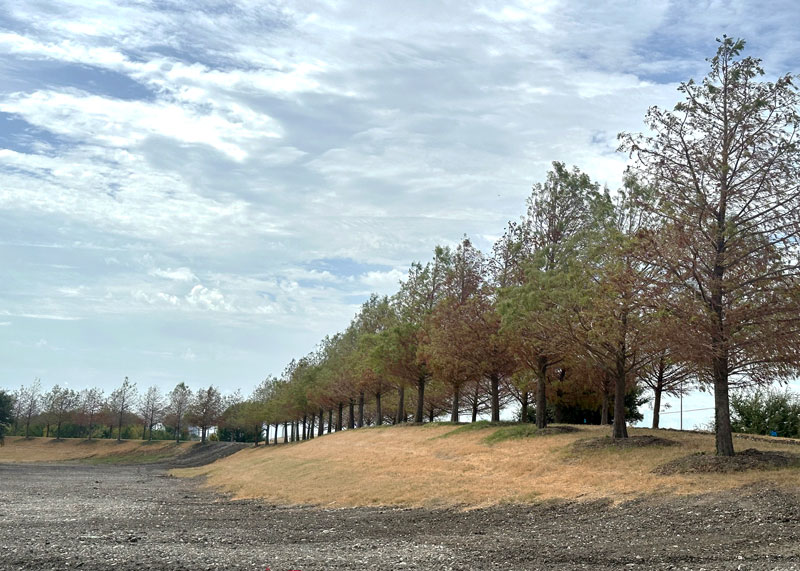
And a final thought in example…
This tall berm would have been better served by most of the species we’ve mentioned above. Planting bald cypress trees, also known as swamp cypresses, at the top of its run-off zone was probably not the best plan. They struggle each summer.