
It’s on stage now across Texas
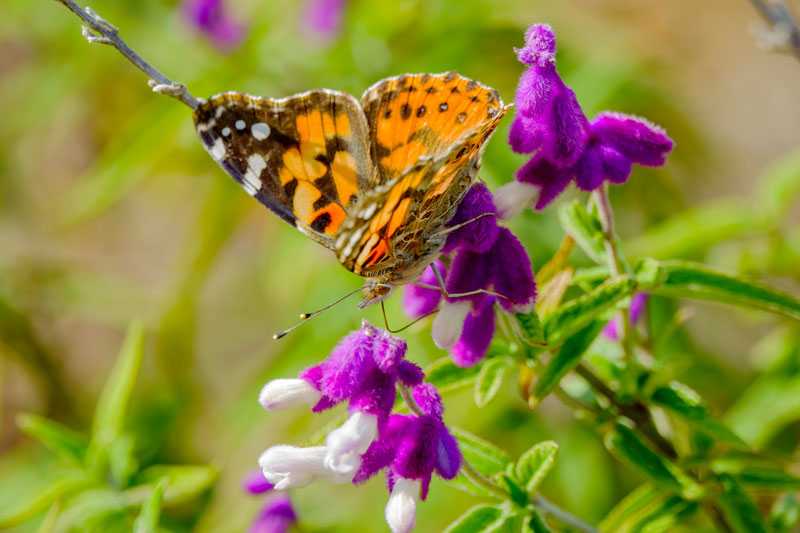
When I took the job as Dallas County Extension Horticulturist in 1970, I was given a box of 35-mm photo slides. They weren’t very good. The previous guy had probably taken all the ones he liked with him – or else he wasn’t a very good photographer in the first place.
One of those photos was a terribly over-exposed image of some plant called “Mexican bush sage.” I’d never heard of it, nor had the nursery people with whom I discussed it. It just wasn’t mainstream yet. Not even close to the banks.
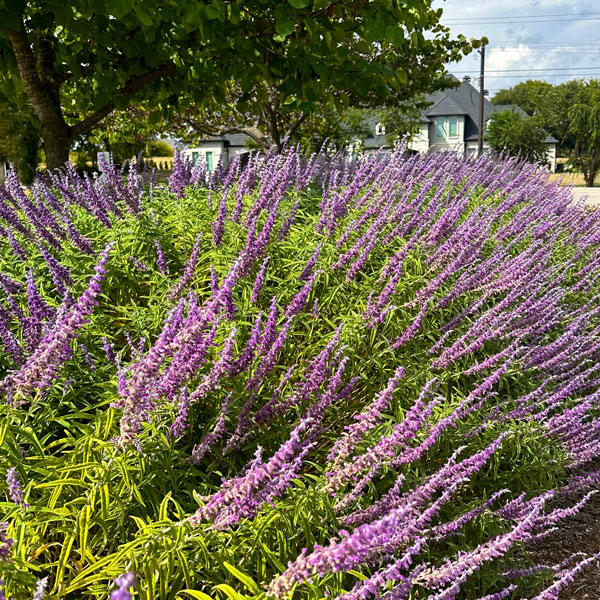
Jump ahead 10 or 12 years and other salvias were starting to gain attention. Top among them was autumn sage (Salvia greggii). And then, one by one, others came into the nursery trade.
Finally, somebody started growing this one and you began to see it all over the place. We all fell in love with it. Many of us still are today.
Let me tell you a bit more about it. The best way to do so is to use my familiar bullets of little facts.
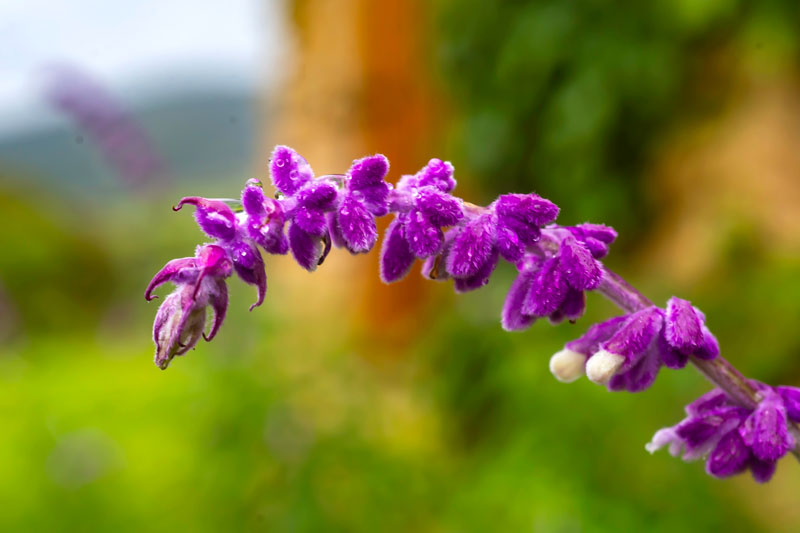
What you need to know…
Common name: Mexican bush sage, Mexican bush salvia
Scientific name: Salvia leucantha
Plant family: Lamiaceae (Mint family)
Native home: Parts of central, eastern, northeastern, and southern Mexico, on into Central America. Subtropical and tropical forest habitats.
First identified: 1791 by Spanish botanist Antonio Jose Cavanilles.
First cultivated: 1846, but little other information is available about when it was first used in landscapes.
Mature size if unpruned: 4-5 ft. tall and wide. (‘Santa Barbara’ is a compact selection.) Space 1-gal. plants 16-18 in. apart at planting.
Hardiness Zone: Best when considered to be root-hardy in Zones 8-11. May survive mild winters in Zone 7. Plant in spring to give plants longest time to establish good root systems.
Soil preference: Well draining. Highly organic. Tolerant of any pH. Raised planting beds work well.
Exposure: Full sun for best flowering.
Moisture requirement: Drought tolerant, but blooms far better if kept uniformly moist.
Recommended pruning: To within 3-4 in. after first freeze. In late May or early June, pinch out growing tips to force plants to branch and stay more compact.
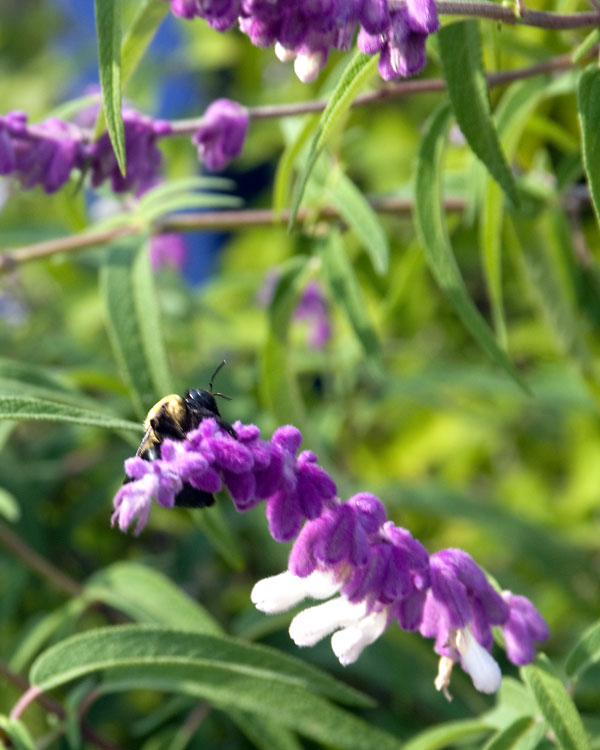
Best landscape uses: Massed within large beds. Backdrop to shorter perennials (most notably mums), fall annual color plants.
Insect, disease problems: None of significance
Varieties (as listed by North Carolina State University): ‘All Purple’ (no white), ‘Midnight,’ ‘Santa Barbara,’ ‘Danielle’s Dream’ (pink and white), and ‘White Mischief’