
Home hobby greenhouse for you?
I’ve been a serious gardener since I was about 10. And I’ve either owned or had access to a greenhouse since I was 12.
My dad and I built a lean-to greenhouse in our backyard in College Station that served me until I left for Ohio State. I had access to the OSU greenhouses while there, and my graduate research work at Colorado State was done in their greenhouses as I worked on carnations.
I taught vocational horticultural in northern Ohio for two years and we had two lovely greenhouses, then I came to Texas to work with Texas A&M. From that point on I had to buy my own greenhouses, and that’s where my real decision-making learning began. I’ll share some of the details with you.
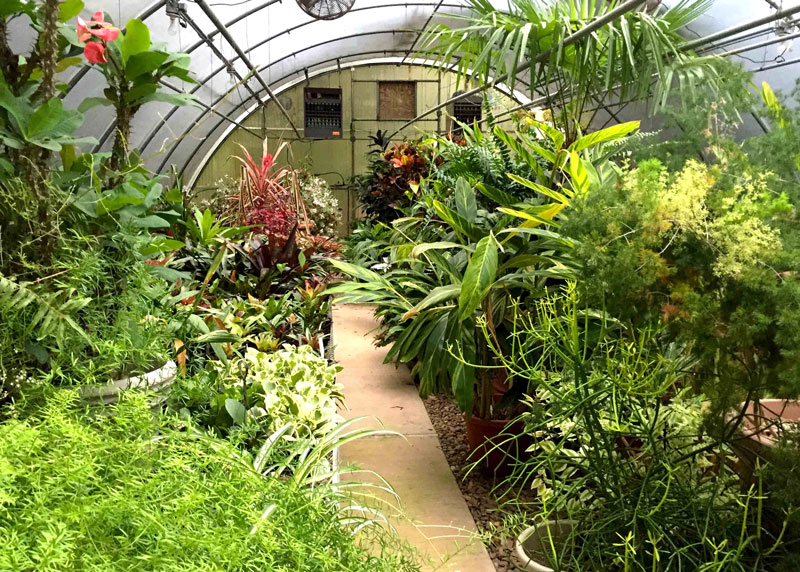
What you’ll want to consider…
Here are things I soon learned with my series of home hobby greenhouses.
• Your greenhouse will never be large enough. You and your friends will always find ways to fill it. Build as large as your budget and space allow.
• Full sun is best, but it is a big challenge if your greenhouse is small. It will overheat very quickly, even on cold, sunny winter days.
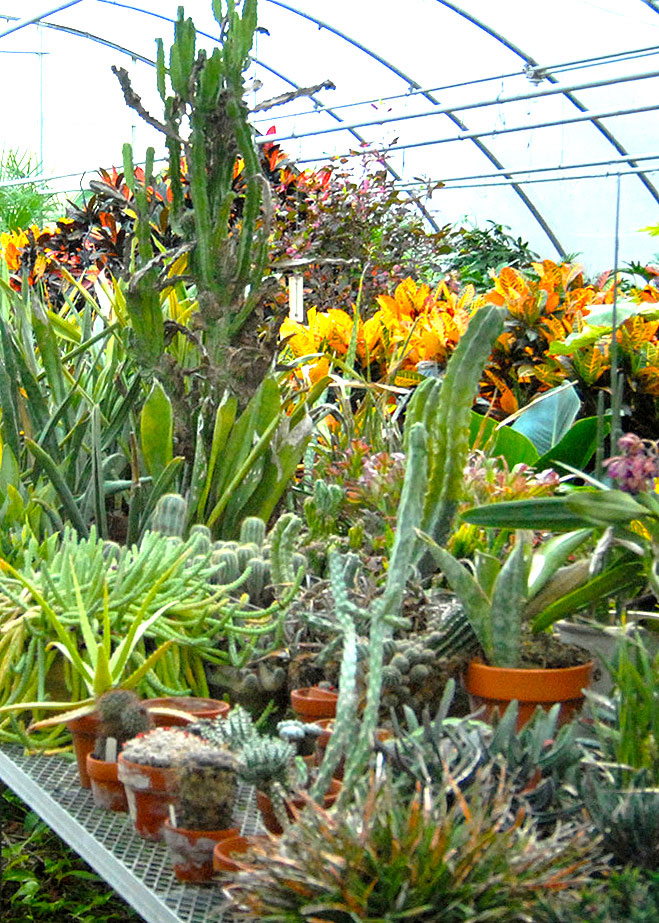
• For most situations, a 10×20-ft. greenhouse is as small as you should go. That would be large enough to heat and cool efficiently, also big enough to hold a nice assortment of plants.
• Glass is the most attractive greenhouse covering, but the structure required to support it is also the most expensive.
• Most commercial growers use double-layered and inflated polyethylene plastic. Use UV-resistant plastic if you plan to leave it in place for several winters.
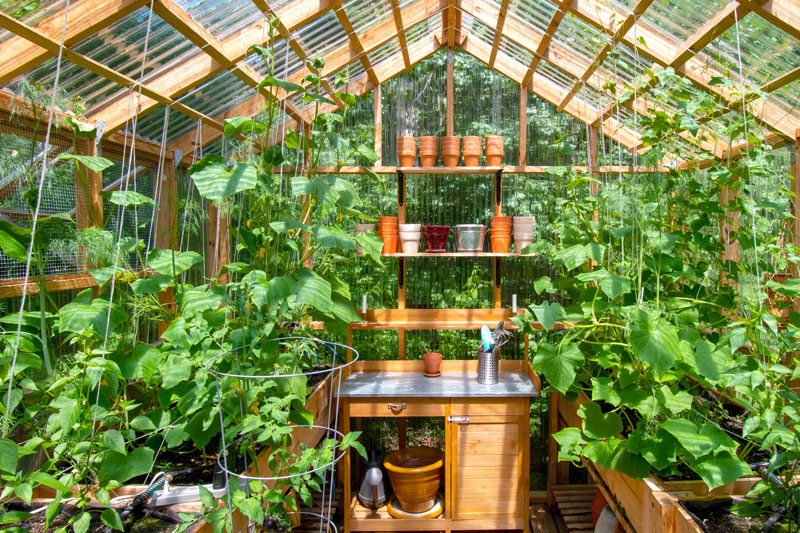
• It’s best to run greenhouses north/south if you intend to install exhaust fans and ventilation pads for cooling in summer. The pads would go on the south end and the fans on the north end. That would allow you to take advantage of the prevailing south winds of summer to pull air through the greenhouse.
• I’ve always used nursery shade fabric to cover my greenhouses. I use 62 percent shade, although you can buy any percentage you wish. I have mine bound and I had grommets put into it so I can easily secure it to the base of my greenhouse. You should allow extra width for shrinkage as you measure and be sure you measure the distance up and over the greenhouse, not the width of the house, for your custom order. (Voice of experience speaking there.)
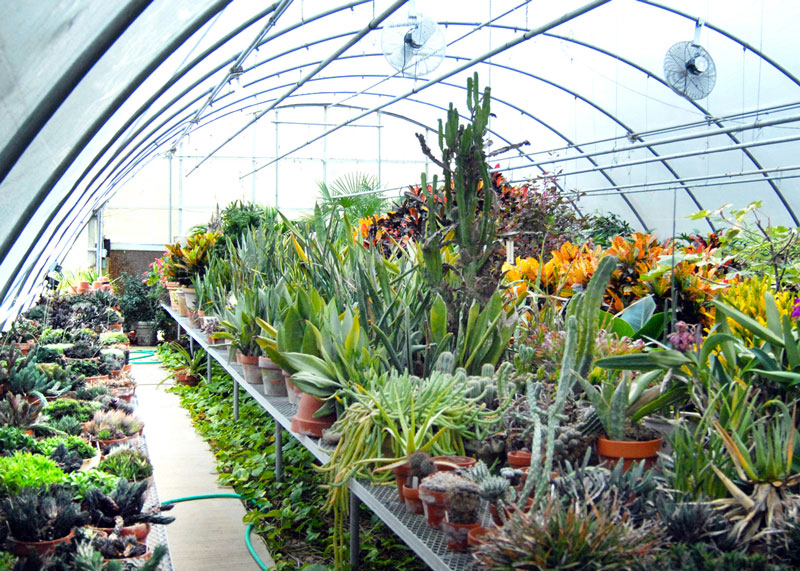
• Benches (“tables”) should be considered carefully. They must be decay- and rust-resistant. Aluminum and pressure-treated wood are good candidates. If you’re reaching from one side, a bench should be 36 in. wide. If from both sides, 48 to 54 in. wide. Brace them to carry the weight of all the plants, pots, and wet potting soil.
• Aisles use valuable space in your greenhouse, so don’t make them overly wide. Measure the width of the wheelbarrow you’ll be moving between them. Allow an extra couple of inches and that should be the width of the aisles.
• Walks should be stumble-free and safe. They’ll frequently be wet, and algal growth will be common. Make provision for cleaning them. I have simple poured concrete walks, and I’ve put coarse gravel beneath the benches to control weeds and increase humidity.
• If you have gas on your property, it will be an affordable means of heating your greenhouse. It must be vented, however, and if a fan is involved in blowing the warm air, you’ll want to have a back-up generator hooked in should the power go out.
• I’ve gotten by in small greenhouses with electric space heaters. I took precautions, however, to keep them up off the ground so they never got wet. I also made provision for a second form of emergency heat in case of a power outage.
• If you have a thermostat installed in your greenhouse, be sure it’s one that’s made for moist settings like greenhouses and barns. I learned the hard way that condensation can short out indoor thermostats. I wished my former HVAC service guy had thought about that.
How do you find a good greenhouse?
Web searches will turn up many manufacturers. Some sell basic houses, while others sell magnificent structures fit for elaborate estates. You’ll even find plans for the skilled do-it-yourselfer. And the weather is turning nicer with each passing week. Maybe this is your time!