
“Native” versus “Naturalized”
Most of the plants we cultivate in Texas today hitched a ride here from somewhere else. In some cases, it was intentional. In other cases, they weren’t really invited. I’ll give you just a few examples.
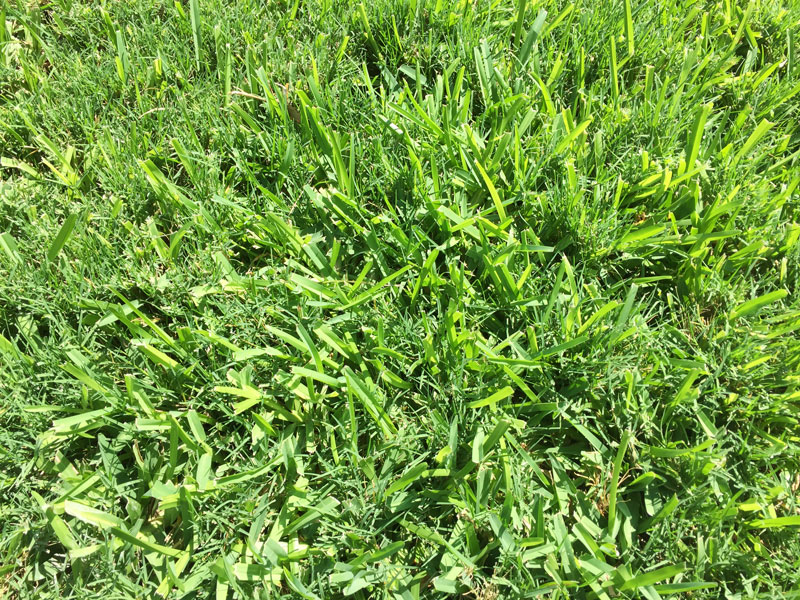
Common bermudagrass, the most widely grown turfgrass across Texas, isn’t native here, but it certainly has made itself at home here. It’s not even native to Bermuda. It comes from Africa. But it’s happy to grow just about anywhere, so it considers itself a naturalized citizen.
St. Augustine. The Royal Botanic Garden at Kew tells us that St. Augustine is native to the southeastern U.S., eastern and southern South America, and western tropical Africa. (I’ll insert my own comment: That’s interesting, since the St. Augustine we know doesn’t normally produce viable seeds.)
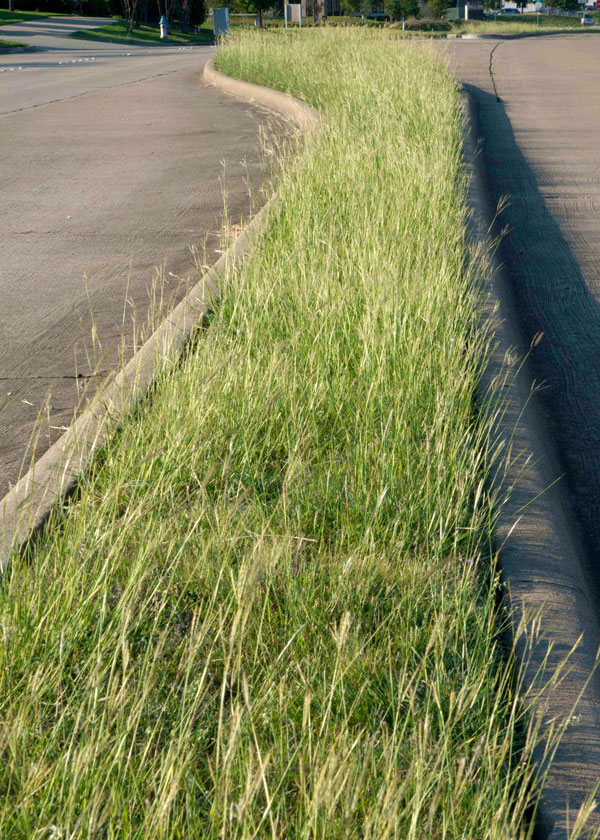
K.R. bluestem, the grassy weed, came to us from China, through California, and on to a USDA research station in Brazoria County. In 1939 a stand of it was observed to have survived extreme drought on the King Ranch. Following research and seed production, it was distributed across Texas as a pasture grass, also for highway rights-of-way to control erosion. Mowing equipment subsequently spread it far and wide until today it is one of the most invasive weeds in Texas turf.
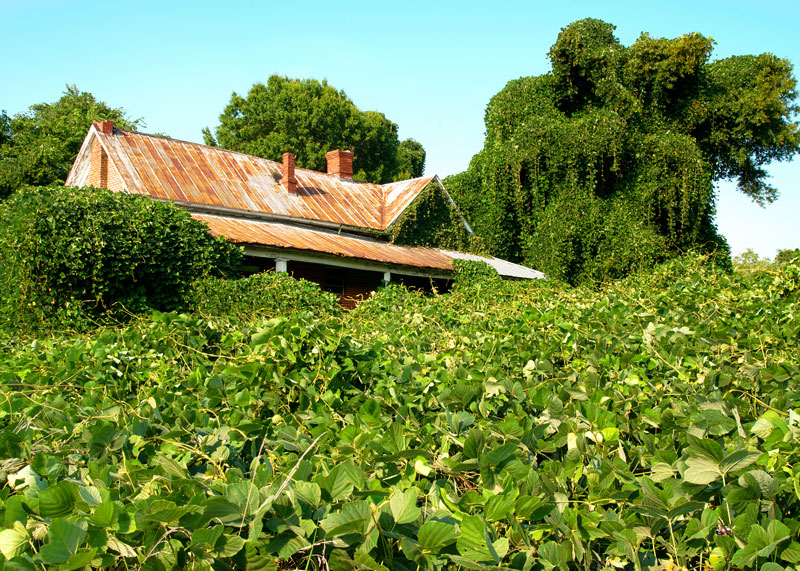
Kudzu This plant’s invasive behavior is well known today, but most people don’t know that it is native to China, Japan, and Korea. It was displayed at expositions in the 1870s and 1880s, and its large leaves and purple legume flowers caught people’s eyes. It was sold as an ornamental vine for use in covering porches and arbors.
During the Depression, the government distributed millions of kudzu plants and actually paid landowners to plant it. Since it is a legume, it was being used to re-energize worn out cotton farm soils.
It was a huge hit and the Southeast adopted it like a long-lost stepchild. But then landowners began to realize that it was shrouding their forests and killing their trees. It was climbing utility poles and shading row crops. By the 1950s it was removed from USDA lists of approved cover crops, and by the 1970s it was listed as a serious weed.
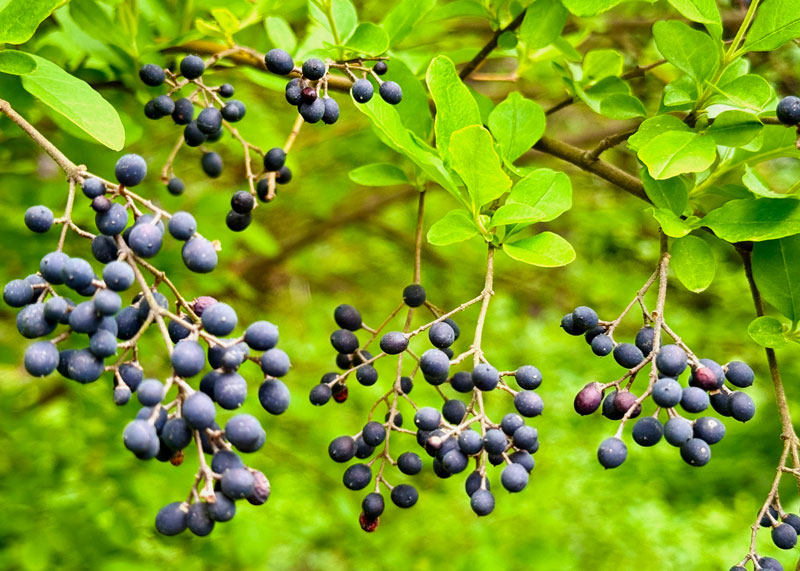
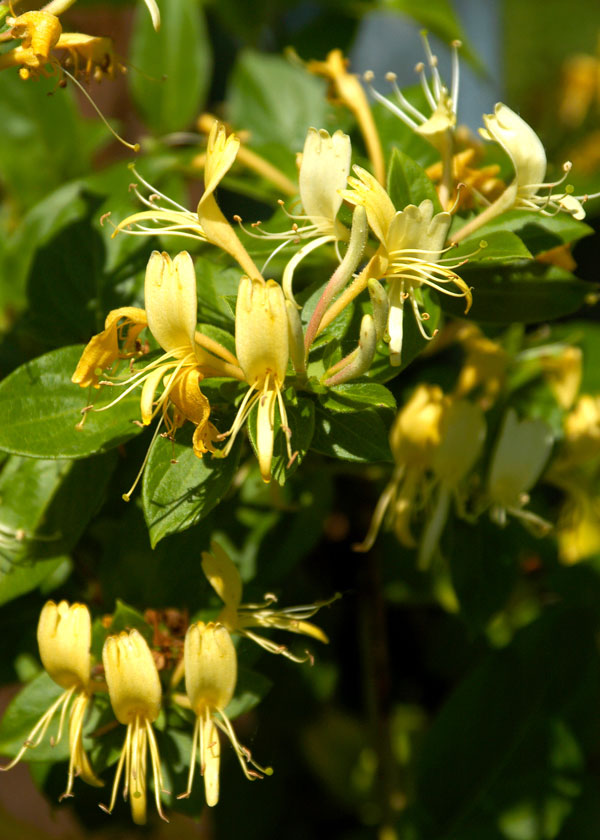
Privets and Japanese honeysuckles. Even with all that, kudzu is less extensive in Texas than the several types of privets and Japanese honeysuckles. Since they have been common landscaping plants in much of the state in decades past, their spread continues.
All of which is to say that we shouldn’t be afraid to use plants from other places. We just need to be sure we’re not bringing problems into our lives. I’ve just scratched the surface. I’m not a big “invasive plant” alarmist. There are those who, in my opinion, carry the concern way too far. I just want us all to be aware.
Two interesting invaders
(one you probably don’t know)…
What got me started on this whole topic was something I saw online a week or two ago.
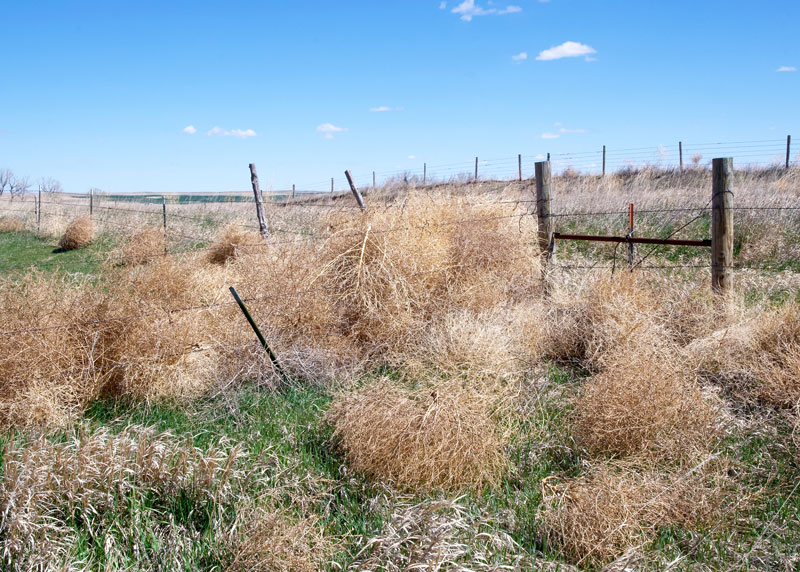
Tumbleweeds. The most common species – the one associated with Texas, the “Wild West” in the movies, and the Dust Bowl – is Salsola tragus. Its common name is Russian thistle because it’s native from Korea, through Siberia, southern Russia, and Ukraine.
According to Kew (Royal Botanic Gardens in England), it came to America with flax seed bought and planted by Russian and Ukrainian immigrants in the southeastern parts of what is now South Dakota. That was 1873, and by the mid-1880s it had spread to cover most of the Great Plains west to California. Railroads carried its seeds efficiently.
The spread of Russian thistles has been designated as the fastest invasion of any foreign plant in history. As the rounded plants finished their life cycles they dried up and died, separated from the soil, and started blowing southward toward Texas. Each plant had the potential to produce 200,000 seeds, so the rest is history.
So now you know that the tumbleweeds for which West Texas and the Old West are famous are really Russian and Ukrainian imports.
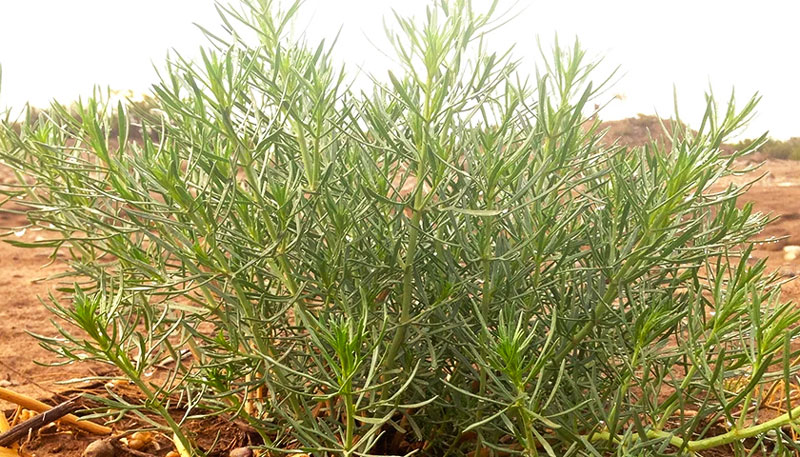
African rue. Unless you raise livestock in a really remote part of the United States you probably don’t know this plant. But ranchers in Loving County, Texas, do. That’s where Mentone is the county seat. Population 22. The entire county’s population is 52 (2025). This area is just north of Pecos on the way to Carlsbad, New Mexico.
I spent two weeks with my dad as he did research on African rue. It’s a plant that is highly toxic to livestock, mainly sheep and goats as I recall. I was in junior high school, and dad and I were applying several different trial herbicides to try to eradicate this weed from large areas (hundreds of acres – probably more like thousands of acres).
So, there was the story as my dad retold it from the ranchers. That was that African rue had come in mixed with camel feed at the beginning of the 20th Century. The weed had escaped and subsequently taken over. As I understood it, the experiment of using camels didn’t last too long, but the African rue did.
But, in doing my research for this story, I find that the camel experiment was much earlier (1856-1860). That was the U.S. Army’s Texas Camel Corps, and their route was much farther south than Loving County. African rue showed up much later than that – 1920s near Deming, New Mexico. African rue had been deliberately planted there by someone interested in producing red dye from its seeds. That was a bad plan from the start, and it only got worse. So, another invited guest turned into a bad visitor that wouldn’t leave.