
Unheralded hoyas: October 22, 2026
I had a hanging basket of a variegated wax plant growing in my backyard in College Station when I was 12. It spent winters in my little greenhouse, and it was living the good life.
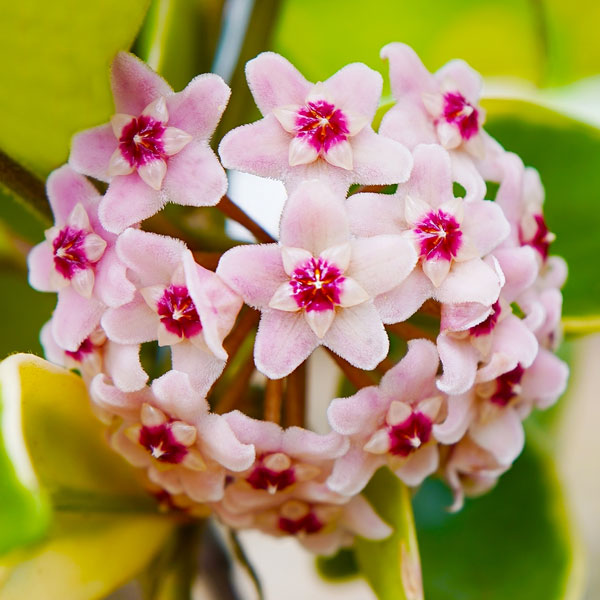
One summer it decided to reward my efforts. While I’d been growing it just for its beautiful leaves, it suddenly developed a cluster of unusual flowerbuds, and when they opened, I could hardly believe what I was seeing. The symmetry of it all. The colors and beauty of each little bloom. I was one happy young plant nerd. Luckily my dad was a botanist, so he understood. My friends at school certainly did not.
So, then I started looking around and I found there were 8 or 10 other species and cultivars in greenhouses and catalogs. I grew several of them. Eventually several of them bloomed.
But about that time, I transferred from Texas A&M to Ohio State, and I had to leave my hoyas behind. By the time I moved back to Texas my interests had moved on to sansevierias, haworthias, daylilies, my wife and our children, and my new job with the Extension Service (not in that particular order).
But I never forgot the joy I’d found with that first starburst of hoya blooms.
The sales rep for my radio programs and print and website things invited Lynn and me into her lovely home one afternoon, and there in front of almost every window was a different type of hoya. She was a hoya specialist, yet she’d never uttered a word. Her plants were beautiful and they were thriving. She and her husband moved away and I’ve lost contact, but I’ll bet she’s still growing her hoyas.
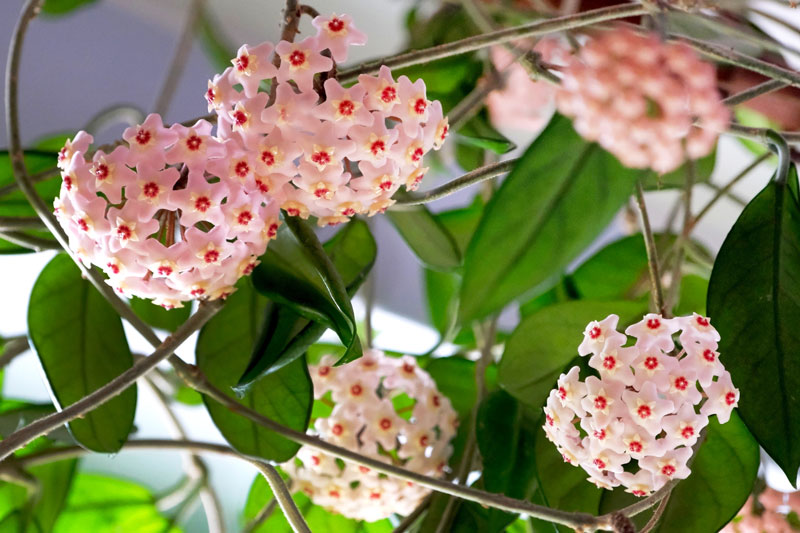
Some facts on these fabulous vines…
• Native homes: India and the Himalayan area through southern China and Southeast Asia, Indonesia, the Philippines, New Guinea, Australia, and many western Pacific islands. They are totally tropical.
• Plant Family: Asclepiadaceae (the Milkweed Family).
• Growth forms: All are vines.
• Number of species in nature: Estimated at more than 550. (I had absolutely no idea there were that many!)
• Who introduced them to gardeners? Hoya carnosa, the common wax plant was introduced to British cultivation in 1802 when it was brought to the Royal Botanic Gardens at Kew from its native home in China.
• What conditions do they experience in their native homes? Many are epiphytes, rooting along tree branches and in bark crevices. Some grow on rocks, and a few are shrub-like. Those that grow on trees use the trees only for support rather than parasitizing them.
The most critical care tips when growing them in home settings:
• Give them bright light but no direct sun in the summer. Insufficient light will limit flowering.
• Keep air around their roots. Use a very loose, well-draining planting soil mix containing horticultural perlite or finely ground bark.
• Water thoroughly, then allow their root systems to dry somewhat before watering again.
• Keep the plants warm. They are happiest at “people” temperatures in the 60-90F range. Do not expose hoyas to temperatures below 45F.
• Leave the flowering spurs, or peduncles in place. New flowers are often produced from those same spurs.
• Hoyas are propagated from short stem cuttings with 3-5 leaves. Rooting hormone powder may also help. Give the cuttings warm, humid conditions for best rooting.
A few notable sources…
Some of the common types will be sold in cactus and succulent collections in local nurseries.
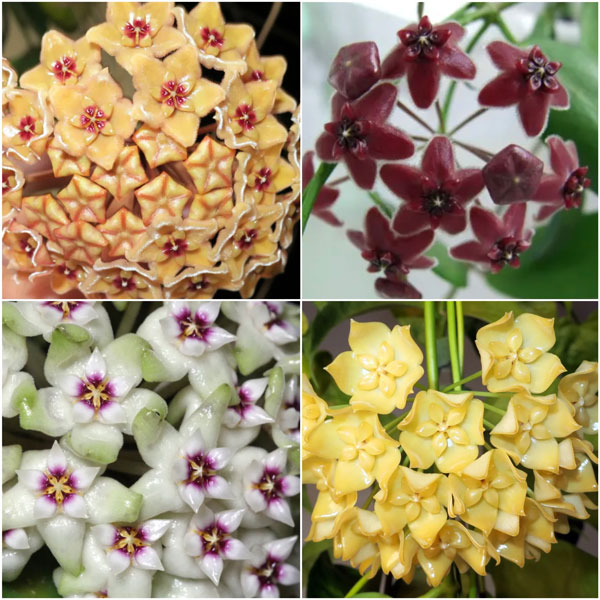
If you are searching for rare and unusual hoyas, there are many vendors on Etsy and eBay that offer them one type at a time. Check each vendor’s ratings, and I prefer to buy only from stateside growers. Read each plant’s description carefully, as it may not be the plant they have photographed. Since these are cold-sensitive plants, I would prefer to buy before winter sets in across the U.S.
Gardino Nursery
In Loxahatchee Groves, Florida, has a large assortment of hoyas. Their website is an interesting read.
Unsolicited Plant Talks
Unusual name for a nursery, in Yucaipa, California. See their website. Perhaps it’s because of the time of year, the vast majority of the types they list are not currently available for sale.
Nest Tropicals
Their website says they grow more than 800 species of Hoyas and selected plants to grow with them. And, they’re based in Texas – outside Austin!
Hoya Cuttings
Another Texas-based (Allen) collector with a ton of types. Many are in propagation currently, perhaps for shipping early next spring. But take a look at their website nonetheless.
Another website you need to see…
Many years ago, I told you about a hobbyist up in Vermont who has been collecting hoyas in his home for 15 or more years. It’s cloudy and dark up there much of the year, yet Doug Chamberlain has done a marvelous job of learning about and growing hundreds of types of hoyas. This is like a textbook on this great group of plants. Just take a look at his website!
And that, my friend, is more than I know about hoyas.