
Q&A – Ask Neil: June 4, 2026
Here are recent issues of e-gardens. Many of the current questions are covered in them.
For one week the Q&A section will be closed down as Gretchen recovers from her shoulder surgery. Watch here next week for your chance to post questions for me. In the meantime, I’d love to hear from you with questions on any of my live Q&A radio programs this weekend. Click through the link for times, stations, and phone numbers.
QUESTION 1
WHAT IS WRONG WITH MY BUR OAKS?
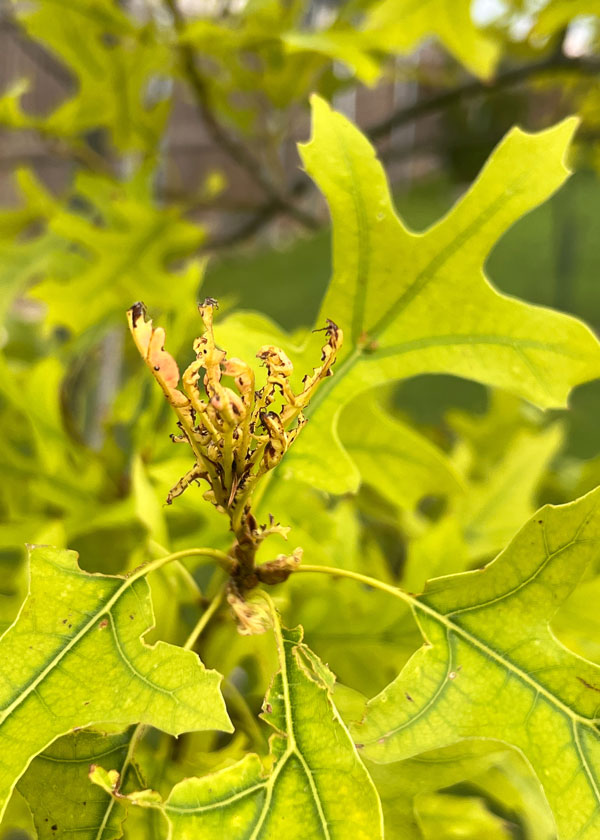
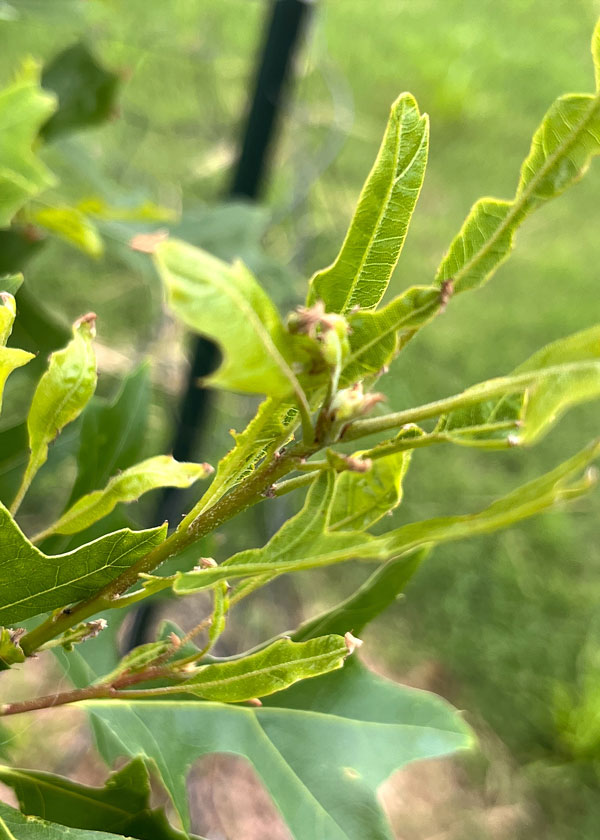
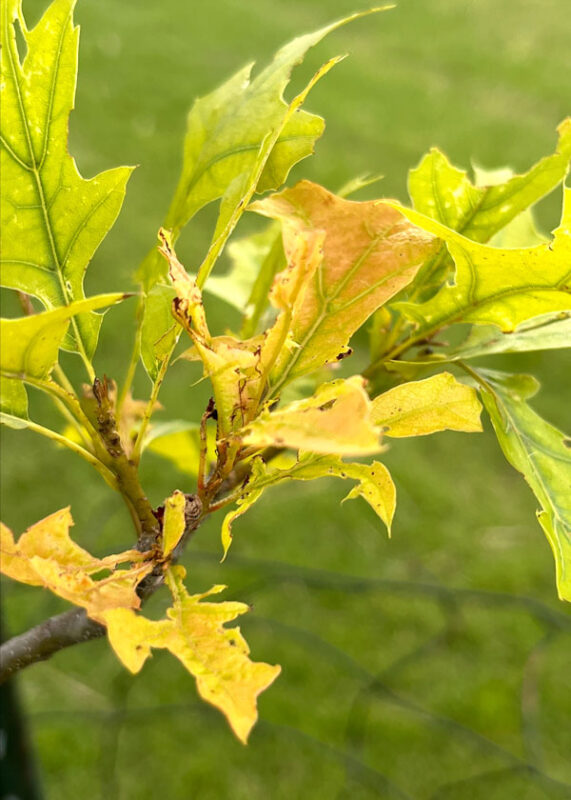
Question: My bur oaks (planted last year) have leaves that look like chlorosis, but their new growth is shriveled up and discolored. My Extension agent suggested chelated iron as a foliage treatment, but I’m still concerned about the shriveled new leaves. Cindy P., Godley, Johnson County.
Images clickable for larger views.
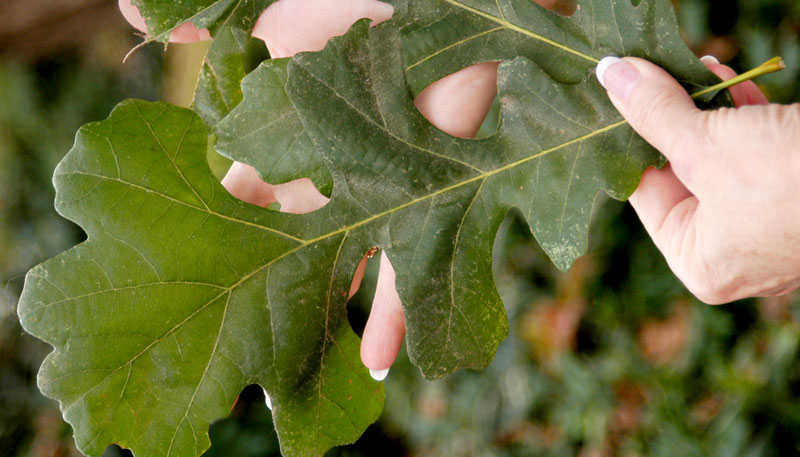
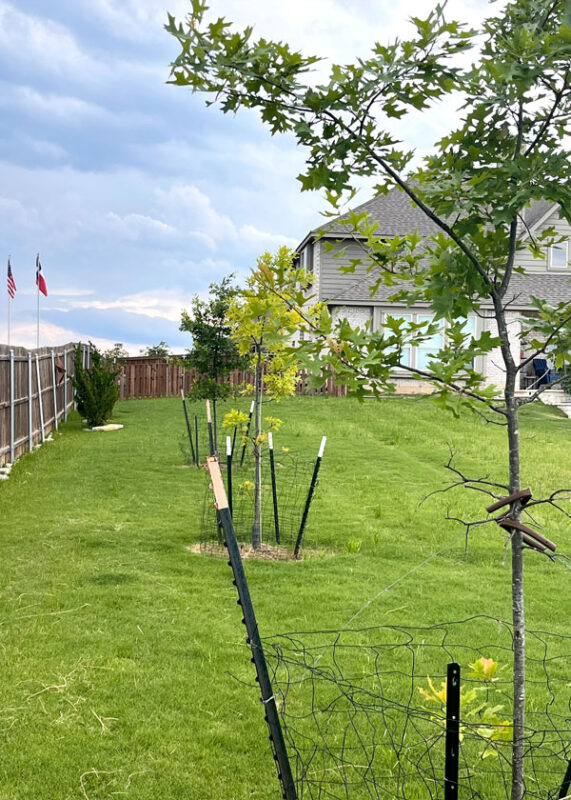
Answer: Those are not bur oaks. Bur oaks have rounded lobes, and these trees have decidedly pointed lobes. You’ll see a photo of my wife holding bur oak leaves in her hands for your comparison. This photo was taken late in a growing season. Our soil’s pH is 7.5, yet you can see there is no iron deficiency showing. Bur oaks should be just fine in your soil in Johnson County if they were, indeed, bur oaks.
These might be Shumard red oaks. We can hope so, but the leaves don’t look quite right for that, either. I would be asking some questions where you bought them. I would never get into a situation where I had to start adding iron to a new shade tree. Let’s assume (for a brief moment only) that it was iron deficiency (“chlorosis”). Let’s assume you put chelated iron on the plant, and suppose it corrected the problem. What are you going to do next year when the trees are larger? And 10 years from now when they’re 20 ft. tall? You would never be able to keep up.
But all that begs the question: I don’t think that’s the right solution anyway. In your photo of your entire yard, I see what looks like debris on top of the lawn. I’m wondering if that might be shriveled up weeds??? Has a weedkiller been applied to this lawn? The damage to your oaks looks like herbicide damage, perhaps from a “weed-and-feed” product???
I would look back at whatever products have been applied near these trees this spring. If it was done for you, check the records. If it was something you bought and applied yourself, check the label. Concurrently, take samples of the leaves, and if you still have them, labels from the trees or the receipt from when you bought them, back to the source and challenge their identity. You have some detective work ahead of you. I do not believe this is simple iron deficiency and I do not believe you have iron deficiency at all. Why would two trees be fine while only the one is showing it? And how could it be showing up so rapidly when the trees were only planted less than 12 months ago? Iron deficiency doesn’t cause leaves to become distorted like this. Herbicide damage does. And iron deficiency doesn’t show up quickly – before a tree has a chance to send new root growth out from its original ball of soil.
QUESTION 2
WHAT CAN I DO HERE?
Question: This has been a problem area in my landscape. Front yard. Faces west. Full afternoon sun. I’ve tried Pride of Barbados and Esperanza and neither has survived the winters. The area is irrigated. Frank G., Leander.
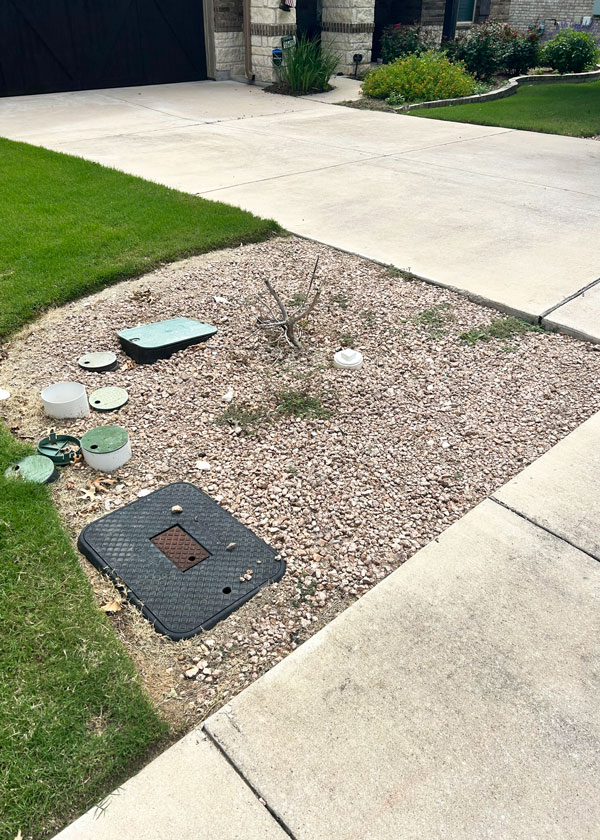
Answer: You’ve chosen two plants that might survive some winters in your area, especially if they were tucked back into a protected corner, but not exposed like that. I’d suggest choosing at least one evergreen shrub to anchor that corner. I’m a believer in something like dwarf Burford holly or dwarf Chinese holly, but there are many other options. Red yuccas have been lovely this spring if you wanted a dense cluster of those and if you wanted to stay with the xeriphytic look. There are several new types that are more compact, deeper red, etc. Or purpleheart as a groundcover will always come back in the spring. Or Salvia greggii in any of its great colors. It blooms almost non-stop early spring until frost. I’d suggest you get into a good independent retail garden center in your area and let the owner or manager show you what they have available that would be more reliably perennial for you.
QUESTION 3
WHAT IS GOING ON WITH MY CRAPE MYRTLE?
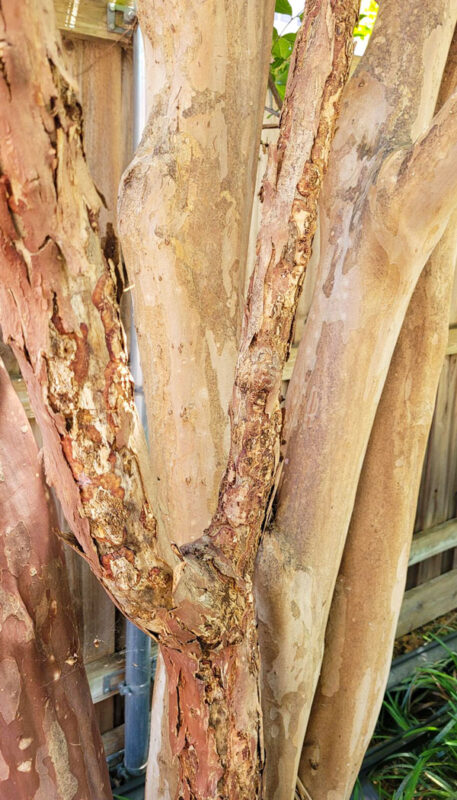
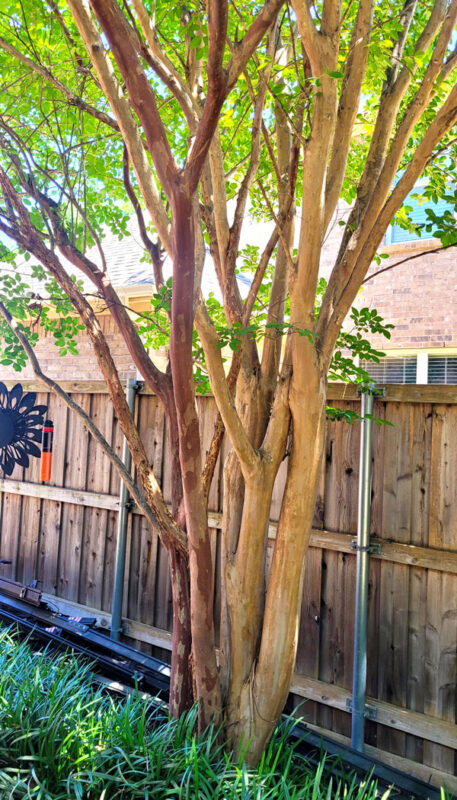
Question: What is going on with my crape myrtle? Searches on the Internet don’t help. I don’t want to lose my tree. My other crape myrtles are fine. Michelle C., Wylie, Collin County.
Images clickable for larger views.
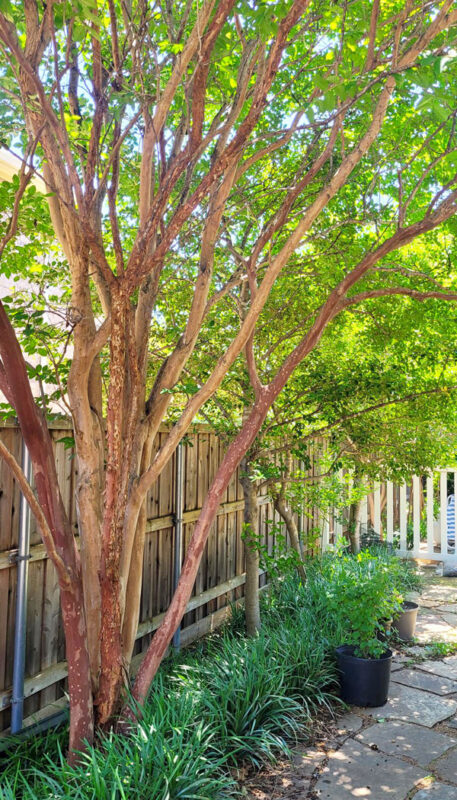
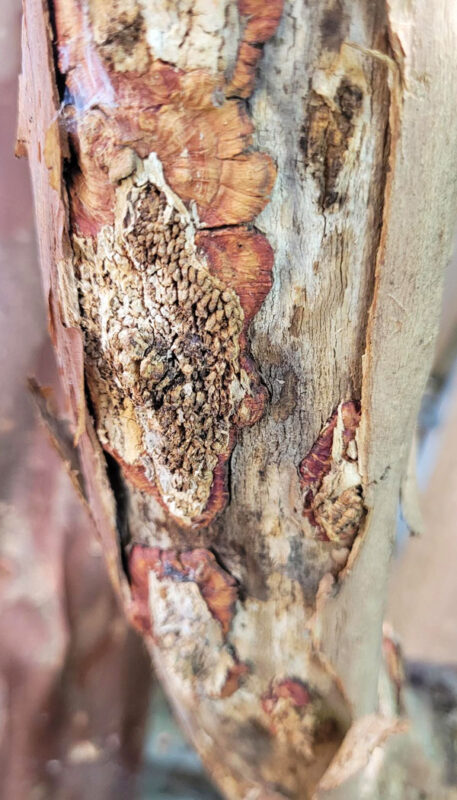
Answer: I work with crape myrtles several days each week. I’ve looked at your photos carefully. I see how crowded the trunks are on the one in question. One or more of those trunks has died back, either from over-crowding or from leftover winter damage. It would help to know which variety. Some (Natchez, Tuscarora as two common examples) are very susceptible to cold injury. You can tell that a couple of the trunks are dead because of the gray, dried, and splitting internal wood. The large patch of bark that is discoloring and about to fall off that trunk is the result of its having died. I do not see any signs of crape myrtle bark scale. It would not cause dieback of plants this large. Without more description from you I don’t know where else to turn. I would suggest thinning the trunks so they don’t rub together and cause problems for the plant overall.
QUESTION 4
SHOULD I KEEP MY JANE MAGNOLIA?
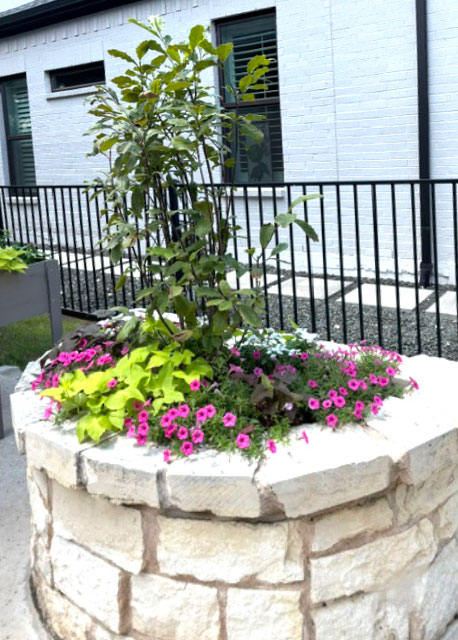
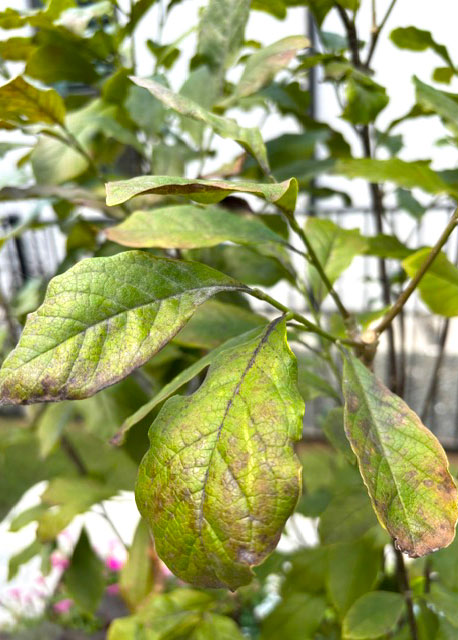
Question: I planted my Jane magnolia in March in a planter that had been a fire pit. It is 20 in. deep, 40 in. long, and 22 in. wide. It has a concrete bottom with drain holes. Should I keep it or replace it with something else like a yaupon holly? Anita V., Granbury.
Images clickable for larger views.
Answer: Jane magnolia is a hybrid type that has been around since the 1950s. We don’t see it as much in Texas because it requires cooler growing conditions and slightly acidic soils. In that respect it would be better suited to the Piney Woods of East Texas than to your area. Having it in a full sun, reflective heat setting probably would tax it more than it could handle. If you have a shaded location, you might consider moving it. I would suggest Nellie R. Stevens holly in that location. It can handle the sun and heat, and it would make a nice bold statement against the white stone. However, do plan on watering it by hand every day or two this summer. And be sure the bottom of that pit drains well. You might want to take a sledgehammer to it to break it open. Drain holes have a way of getting plugged up.
QUESTION 5
WHAT CAN I DO WITH OXALIS?
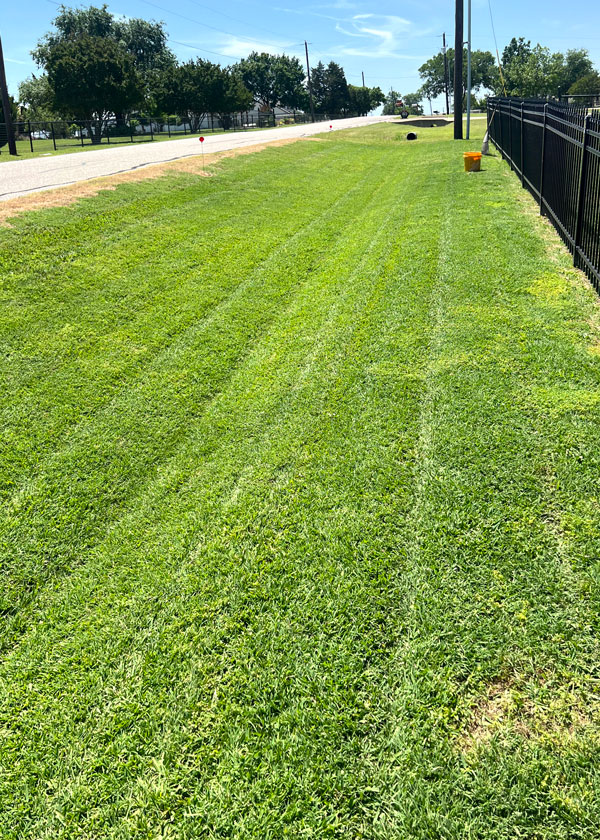
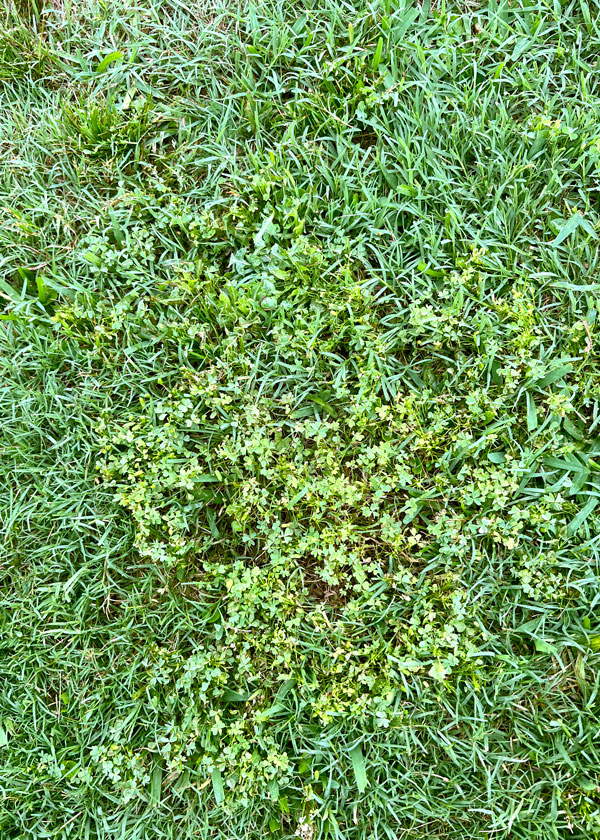
Question: My lawn was all St. Augustine at one time, but due to its issues it now has some bermuda in it. I’ve had a few weeds over the years, but this year it was invaded by what I believe is oxalis. I don’t know what to do. Derrel L., St. Paul, Collin County.
Images clickable for larger views.
Answer: Indeed. That is oxalis, or sheep sorrel. It can be controlled with a broadleafed weedkiller spray containing 2,4-D applied with a tank sprayer. Buy it as the concentrate, then dilute it according to label directions. Add one drop of liquid dishwashing detergent per gallon of spray you mix. That will help hold the spray on the waxy leaf surfaces of the oxalis. Do not mow for several days before or after you apply it. The same goes for watering. The herbicide will be taken in through the leaves and should start taking effect within a day or two. Read and follow label directions for best results. Do not allow the spray to drift onto foliage of desirable trees or shrubs, and do not saturate the soil beneath trees and shrubs.