
Q&A – Ask Neil: October 15, 2026
(Please read these instructions carefully.)
Before you post your question, please look at recent issues to see if someone else has already asked it. You might find your answer there.
HOW TO SUBMIT YOUR QUESTION…
• Click here to post your question. (Please post your question only one time.)
• Please use this link only for posting questions – not for standard e-mails.
• High-resolution photos (1-2MB – not thumbnails) attached with your question help Neil give you the best possible answer. Please check your photo for clarity and exposure. If you do not see “All images clickable for larger views,” your images’ resolution was not sufficient for enlargement. That might also have made it difficult for Neil to give you an accurate answer.
• Neil chooses questions of greatest reader interest. Plant IDs rarely fit that description.
• Neil requires your first name or initials, also your city or county for an accurate answer. (Texas is a very large state.)
• One question per reader per week, please.
• Watch for Neil’s reply in the next issue of e-gardens.
Note: If you have submitted your question and did not see the pop-up window for attaching your photo, please click here.
QUESTION 1
HERE’S MY FAUX WOODLAND SETTING.
Question: My small front yard is dominated by two large live oaks. Grass would not grow due to the shade provided by them. I decided to create a faux woodland setting. Fred, Collin County.
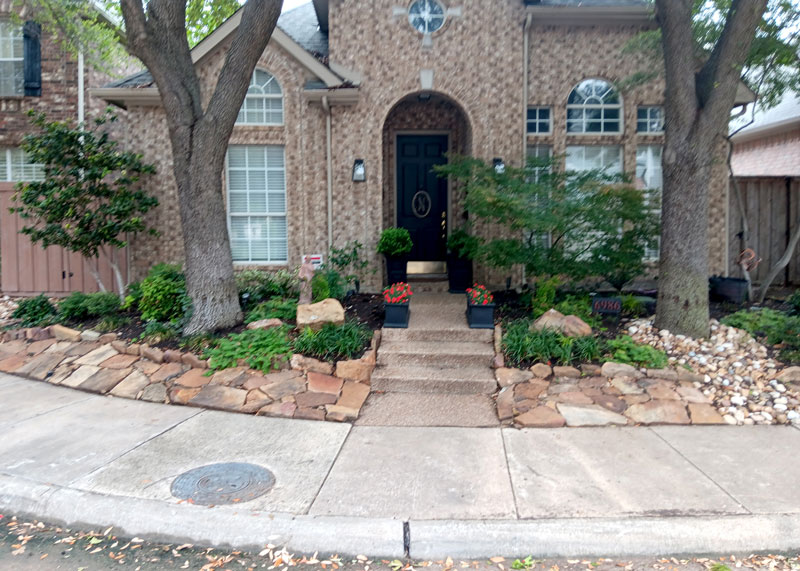
Answer: You’ve done very well with what you were given.
I don’t see any question, so I’ll just make a couple of general comments from your platform. Thanks for sliding it out for me.
Look on any forestry or horticultural website for the expected mature size of live oak (Quercus virginiana) and you’ll see that they are some of the largest trees in the South. I’ll use the respected North Carolina State University horticulture website, which states they can grow to be 50 ft. tall and taller, but with branches reaching out as far as 100 ft.!
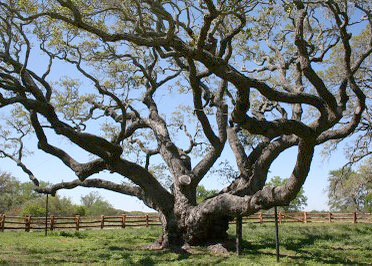
The famous “Big Tree” in the Goose Island State Park near Rockport is more than 1,000 years old. Estimates are that it’s gone through as many as 50 major hurricanes, including a direct hit from Hurricane Harvey. Its condition was the first thing many of us wanted to know about after the storm cleared. It has a trunk diameter of more than 11 ft.
Point being these several questions:
• Why on earth do builders and developers saddle people with such huge trees in zero-lot-line neighborhoods?
• Why do HOAs require two trees of this size be planted in every front yard regardless of lot size?
• Why do many HOAs then often require that turfgrass be planted beneath the trees? (We found out in the ‘60s with the Astrodome that grass won’t grow in the shade.)
• Why do cities not intervene? Those that have “approved tree” lists often don’t bother to mention the mature sizes of those approved trees.
• In fact, why do cities not change their tree ordinances that allow live oaks to be planted right beside busy streets on one side, sidewalks on the other, and beneath power lines? That doesn’t even mention the gigantic buttressing roots that old live oaks can develop. They are huge trees in all directions. I love live oaks, but they need room.
• Why do cities allow companies maintaining parking areas for shopping centers and other commercial spaces to “lift the canopies” of shade trees so high that the trees’ naturally beautiful growth forms are turned into grotesque nightmares.
I’ll say it again, Fred… You’ve done a really nice job with the challenges you were given. I apologize for going off like a land mine. Obviously, it’s something that’s been bothering me for a while. (Like 50 years!)
QUESTION 2
I NEED ADVICE ON TREE WRAPS.
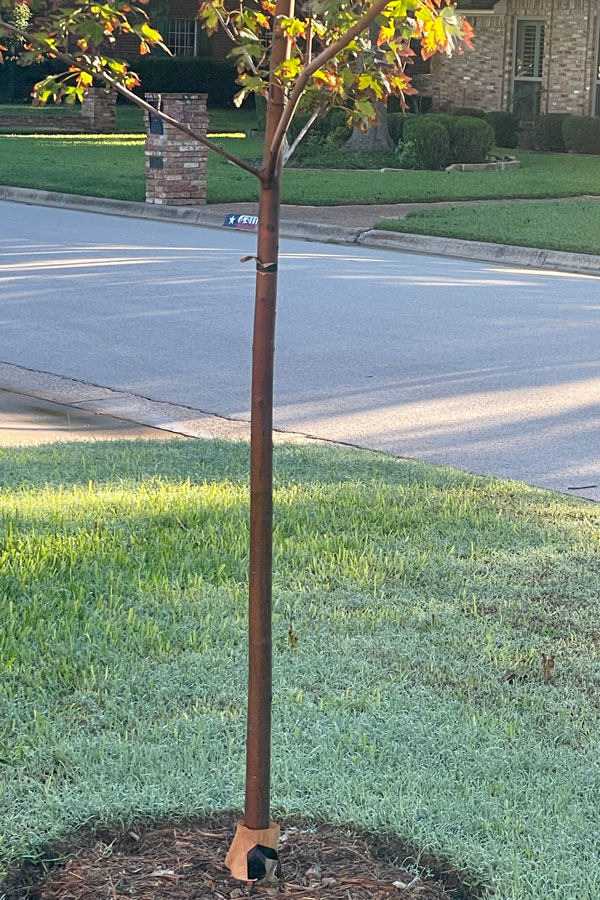
Question: I have two new maple trees. Squirrels love the tree wrap! Researching “squirrel-proof” alternatives, I found significant conflicting information about dark tree wraps retaining heat and harboring insects around the trunk. Can you provide clarity and/or other alternatives? David B., Colleyville, Tarrant County.
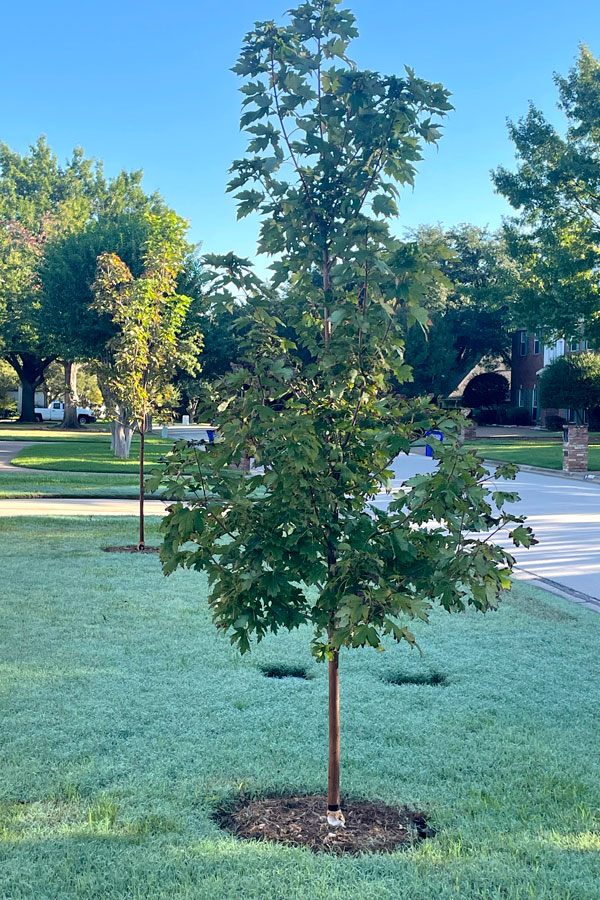
Images clickable for larger views.
Answer: Let’s take it one step at a time. The first goal was to keep the west sun from causing sunscald of the trunk for the first couple of years the young trees were in their new home. That remains a concern that we must face. Maples have very thin bark (just as red oaks and Chinese pistachios do), so without protection, they are set up to fail three or four years after planting.
For that, I have always used the beige-colored paper tree wrap that stretches as it’s being put into position. Here is a photo of a tree we wrapped at a friend’s house earlier this year.
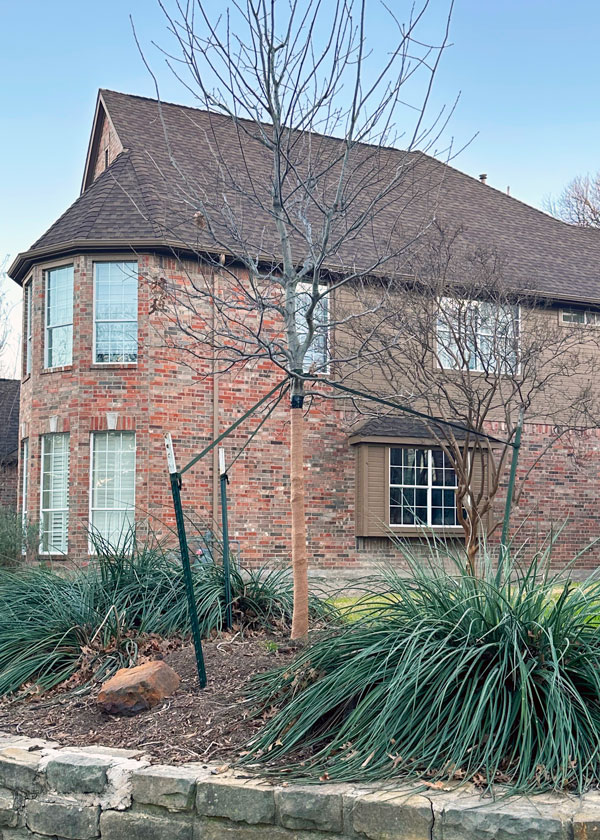
That wrap is light-colored and would not have a heat problem. If it is applied at the time of planting, insects would have a hard time getting beneath it. I have not had a problem with squirrels with it.
If I did use it, and if squirrels peeled it away, however, I would use one of the plastic trunk protection products that snaps in place up and down around the trunk. They would work on trees the size of yours, and I don’t believe squirrels would bother them. Then again, we’re talking about squirrels, so who knows. But those would be my answers. I hope there is help in there.
QUESTION 3
WHAT WOULD BE A REPLACEMENT FOR A DWARF WAX MYRTLE?
Question: I had two dwarf wax myrtles at the entrance to my house. Half of one of them died. Is this typical of this plant? If I need to replace it. Is there a similar dwarf plant? Jo F., Fannin County.
Answer: Fannin County used to be one of the counties I served when I worked for the Extension Service, and if my memory is correct, much of the county is in the Blackland Prairie. If that’s the kind of soil you have, dwarf wax myrtle would be expected to have problems after a few years. The wax myrtles are native to acidic wetland soils of Southeast Texas on across the South. I’ve not had the best of luck keeping them going for more than 5 to 8 years in alkaline clays in the North Central Texas area.
As for a good replacement, again I’d defer to the short hollies, either one of the types of dwarf yaupon holly or dwarf Burford holly, depending on how tall you wanted the plant to be as it matures. Dwarf yaupons grow to 36 in., while the dwarf Burfords could be maintained at 42 to 54 in. Compact glossy abelia would be pretty, although I’ve had trouble keeping them uniformly shaped. Other people (who probably prune more than I do) seem to get along well with them.
QUESTION 4
IS IT TOO LATE TO TREAT FOR GRUB WORMS?
Question: I was doing some sprinkler repairs recently and I found three grub worms, one in each of the heads I was working on. Is it too late to treat for them? Would it be a waste of time and money to treat for grubs now? Randy M., Dallas.
Answer: That doesn’t sound like much of an outbreak. To do measurable damage you need 4 or 5 white grubs per square foot. I was working for the Extension Service when DFW was hit by a horrific plague of white grub worms in the 1970s. I worked with several Extension entomologists, and I personally dug in several yards where we were testing insecticides and where I found 65 small, recently hatched white grub worms per square foot in September. That was within one mile of the TAMU Center on Coit Rd. in Dallas where I worked. Damage that year was awful.
It was determined in those experiments by the entomologists that the grubs’ feeding stopped by November 1 in North Central Texas, and they were the ones who set that threshold of 4-5 per square foot. Save your money. Save the insecticide.
QUESTION 5
WHAT IS HAPPENING TO MY DWARF BURFORD HOLLY?
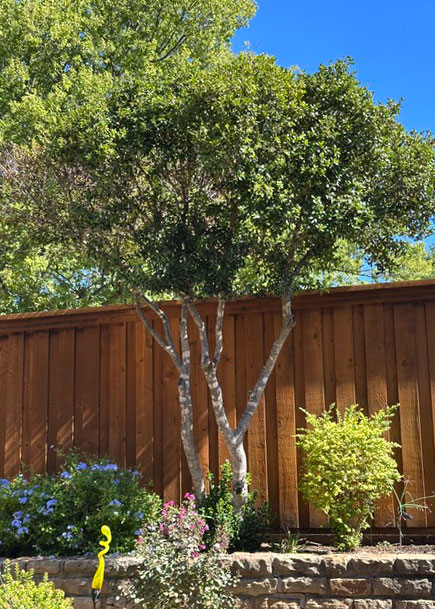
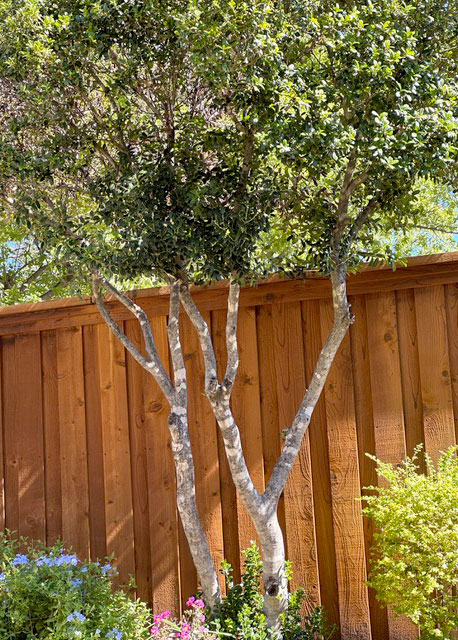
Question: These are photos of my 22-year-old dwarf Burford holly. The left side looks like it is dying. What has happened to the bark? Marsha J., Garland.
Images clickable for larger views.
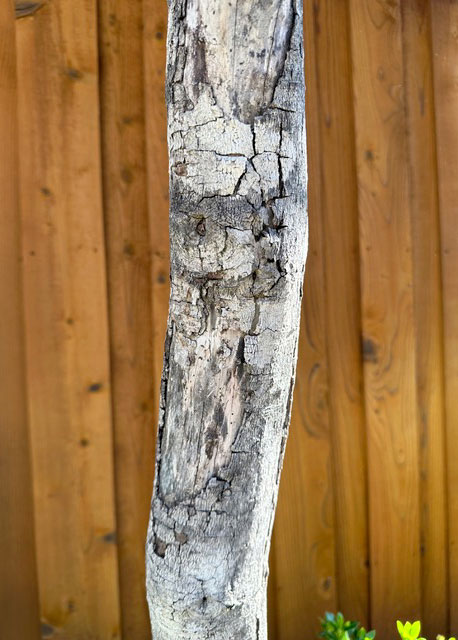
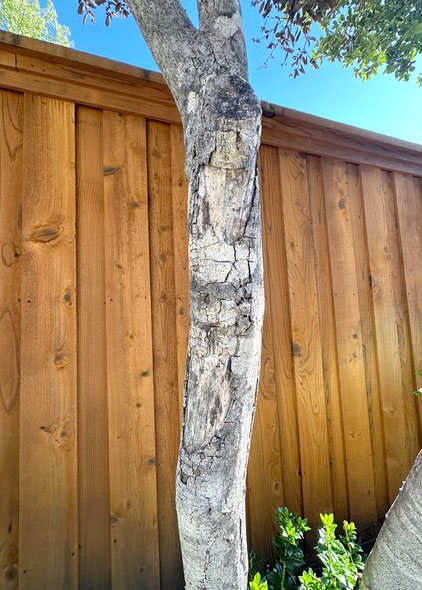
Answer: You’ve sent a nice sequential set of photos. Thank you. There is decay within the trunk where the wood has dried and is cracking. It looks like it might have originated near the top of Photo 3 where that dark circle can be seen in the bark. Decay often moves downward within the wood of a trunk or branch. It looks like something didn’t heal properly after a branch was pruned or broke off – I can’t tell at this point. That sort of thing happens. Hopefully, once the dead side is removed you’ll be able to reshape the plant. Otherwise, it may be time to start over with a new plant, either another dwarf Burford or perhaps with a taller variety.
QUESTION 6
WHAT TIME OF YEAR WOULD BE BEST TO HAVE OUR POST OAKS AIR-SPADED?
Question: We have three old post oaks that need to be air-spaded as per our arborist from Arborilogical Services. Should I cut my azaleas back 1-2 ft., or should I trim them back to 10-12 in.? What time of year would be best so the azaleas would have the best chance of surviving? Carolyn V., Grapevine.
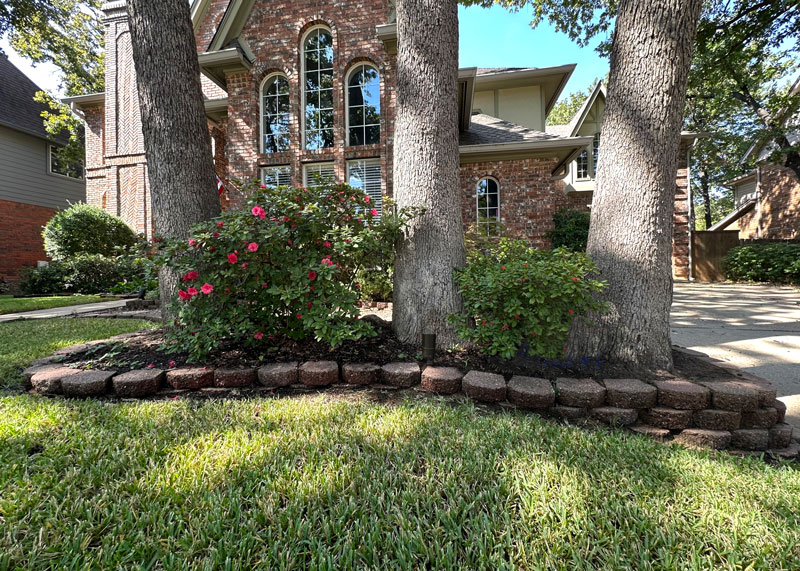
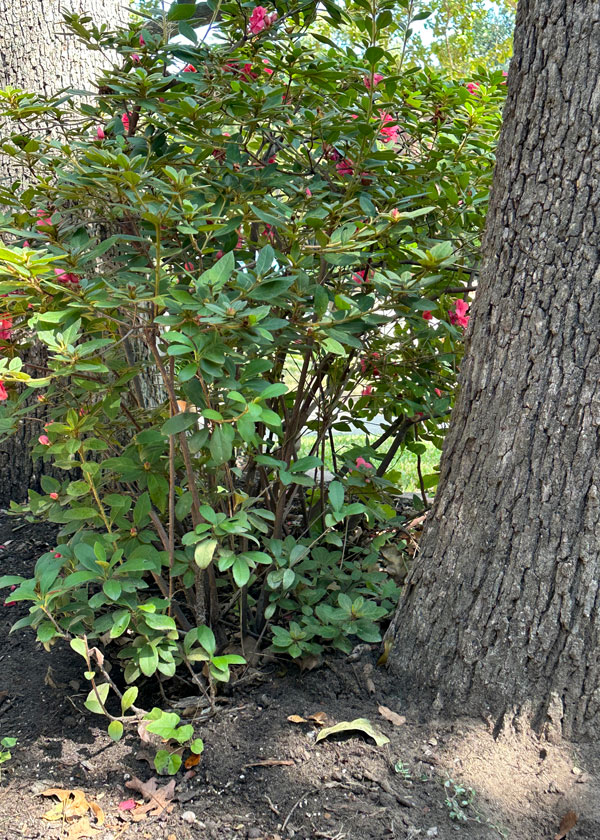
Answer: You’re having the trees air-spaded because their root flares are covered by the soil in the bed. Good call! And thanks for using our advertiser. No company is any better!
The big vote in this election is with the trees and when the air-spading should be done for their health and vigor. Your arborist should make most of that decision. If you have the option of picking a time for the azaleas, I’d say early winter (December) would be ideal, and you ought to prune them back as little as possible. However, the air-spading is pretty dramatic. The azaleas’ roots are right in there with the soil that’s going to be lifted out. You might be better off trimming your azaleas back by 40 or 50 percent and then digging them and putting them into pots while the work is being done around the trees. Then you could replant them, but you’ll need to be careful not to prepare a raised planting bed that gets you right back where you are now. By setting them aside you could give the area a while to settle down. You’d have that time to consider what look you were trying to create.
QUESTION 7
WHAT IS WRONG WITH MY ESPERANZA?
Question: My Esperanza looks like it has rose rosette. What do you think? Jack K., Bryan.
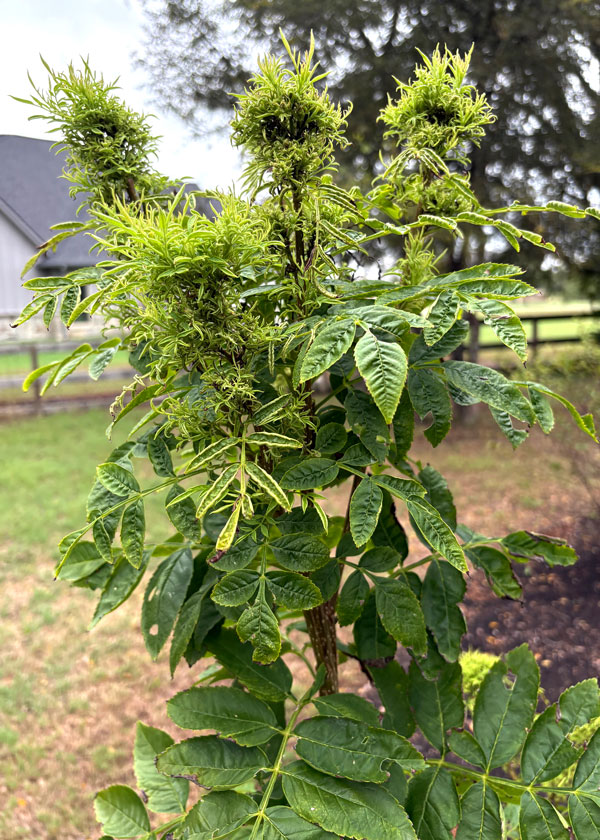
Answer: It’s been exposed to a really bad dose of a broadleafed weedkiller such as 2,4-D. You may have seen several other questions and photos like this in the past several weeks here. They were of several other types of plants, but the symptoms were identical. This type of damage can come from misapplications made to your lawn, or it could be from drift from a neighbor’s spray. It can even be from residue left in the spray tank. The Esperanza is not going to bloom properly this fall. Hopefully it will survive for another try next year.